Is It Safe to Ride a Motorcycle in Nepal? An Honest Guide
Yes, you can ride a motorcycle in Nepal reasonably safely, but it carries real risk and it is more dangerous than riding at home for most visitors. Roads are poor, traffic is unpredictable, mountain weather can close a route within hours, and serious medical care may be a long way off. Most of those risks can be reduced with the right route, timing, insurance and riding habits. None of them can be removed.
This guide sets out what the figures and government travel advice actually say, then goes through each risk and what to do about it. It is written for visiting riders, and we would rather you arrive prepared than reassured.
In this guide
- What the numbers say
- What governments advise
- The main risks at a glance
- Traffic and riding behaviour
- Mountain roads, landslides and weather
- Altitude
- Medical care and evacuation
- Insurance: the part riders get wrong
- What to do after a crash
- Guided or self-riding: which is safer?
- Safety checklist
- Frequently asked questions
What the numbers say
Motorcycles dominate Nepal’s road accident figures. According to figures reported by Republica, the country recorded 29,988 road accidents and 2,707 deaths in fiscal year 2025/26. Motorcycles were involved in 26,424 of those accidents, or about 88%.
Those figures need some context. Motorcycles are the most common vehicle in Nepal, so a high share is partly a matter of numbers. The figures also cover every rider in the country, not visitors on tours, and we could not find any published accident rate for foreign riders. So they cannot tell you your personal odds. They do show that riding here is not a low-risk activity.
Behaviour matters too. In a one-month traffic police report covered by the Kathmandu Post, speeding was recorded as the cause of 1,160 of 2,276 accidents, about half, and drink-driving accounted for another 247. Both are within your control, even though other drivers are not.
What governments advise
Government advice is written to be cautious, but it is a useful check against optimistic tour marketing.
- Canada says road conditions are poor throughout the country, that speeding and disregard for traffic laws are common, and that you should avoid driving after dark. It also says helmets are mandatory for motorcyclists and that serious cases often require evacuation abroad.
- Australia warns that road travel is more dangerous at night, and advises against driving between cities after dark. It also says helmets bought in Nepal may not meet Australian safety standards, and that insurance could be void if you drive without an International Driving Permit.
Check the current advice from your own government before you book, as it can change and may affect your insurance.
The main risks at a glance
| Risk | Where it matters most | What reduces it |
|---|---|---|
| Traffic | Kathmandu valley, Prithvi Highway | Ride early, ride defensively, leave more space |
| Night riding | Everywhere | Be off the road before dark |
| Landslides and washouts | Hill roads, Kali Gandaki, Marsyangdi, mostly June–September | Avoid monsoon, check locally, wait after heavy rain |
| Loose surfaces and drop-offs | Mustang, Manang, remote roads | Choose a route that matches your skills |
| Altitude sickness | Above about 2,500 m | Slow ascent, rest days, descend if symptoms worsen |
| Distance from medical care | Everywhere outside the main cities | First-aid kit, evacuation cover, communication plan |
| Gaps in insurance | All riders | Read your policy before you book |
Traffic and riding behaviour
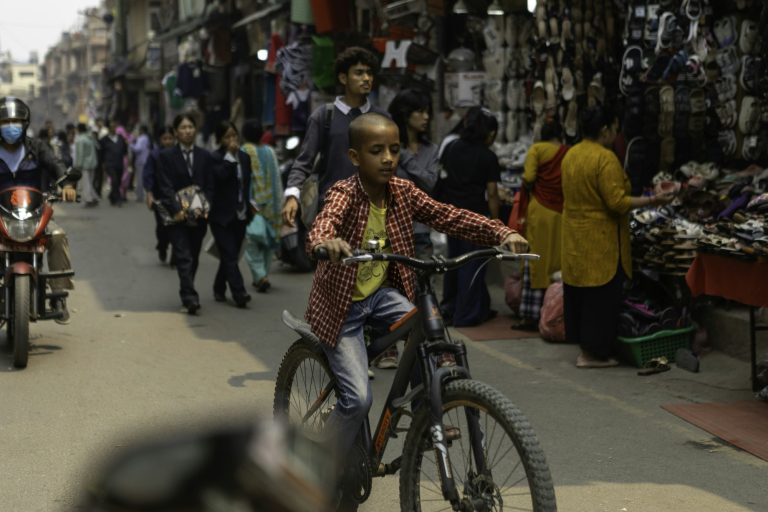
Nepal drives on the left. Beyond that, do not assume the rules work as they do at home. Expect buses overtaking on blind bends, trucks stopping without warning, pedestrians and animals in the road, and bikes filtering on both sides of you. The Prithvi Highway between Kathmandu and Pokhara is the most obvious example: it is fully paved, yet it is one of the most demanding roads in the country because of what is on it.
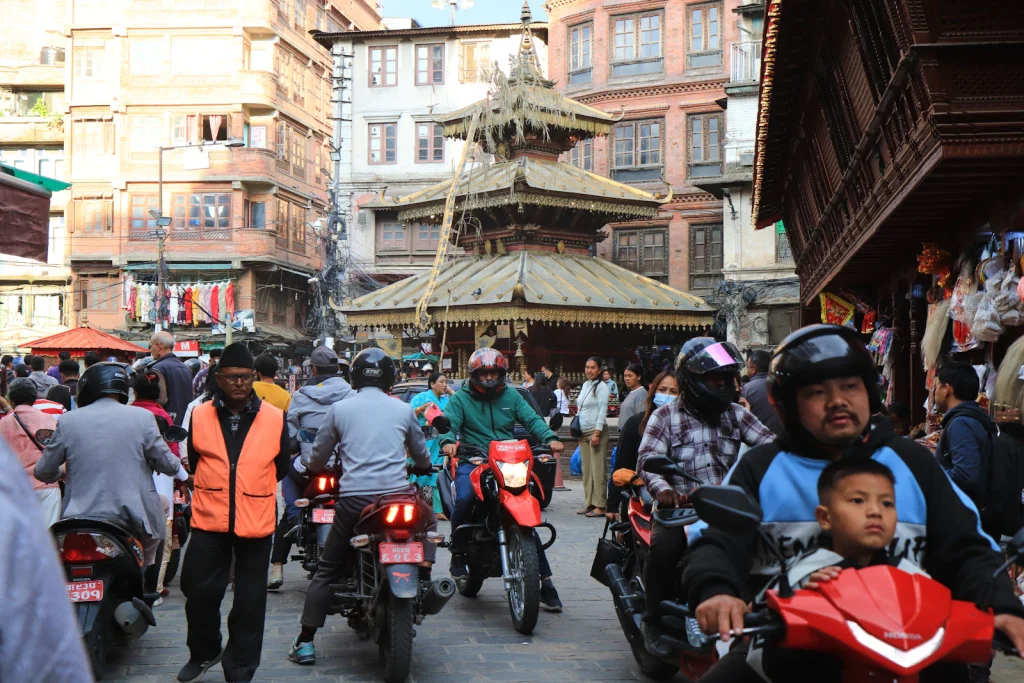
- Slow down. Leave enough room to stop within the road you can see, particularly on bends and through villages.
- Use your horn. A short beep before a blind bend or when overtaking is normal here and tells others you are there.
- Assume you have not been seen. Keep clear of a bus or truck’s blind spots and do not overtake unless you can see well ahead.
- Beware of surface changes. Tarmac can turn to potholes or gravel with no warning, especially near repairs.
- Do not drink and ride. Canada’s advice describes zero tolerance for drink-driving, and it is one of the main recorded causes of accidents.
- Stop riding before dark. Poor lighting, unlit vehicles and hidden road damage make night riding a poor bet. In heavy rain, police have also banned night travel on highways including the Prithvi, as they did in September 2026.
You also need the right paperwork. Our guide to the International Driving Permit, licence and road rules explains what riders need to carry.
Mountain roads, landslides and weather
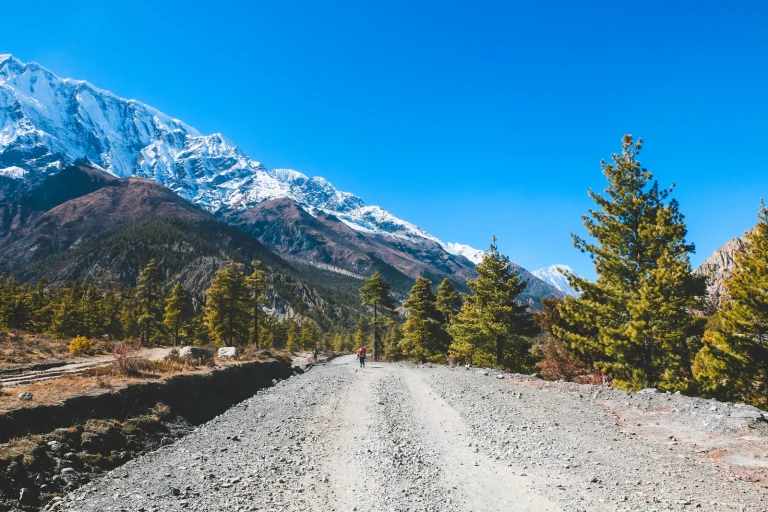
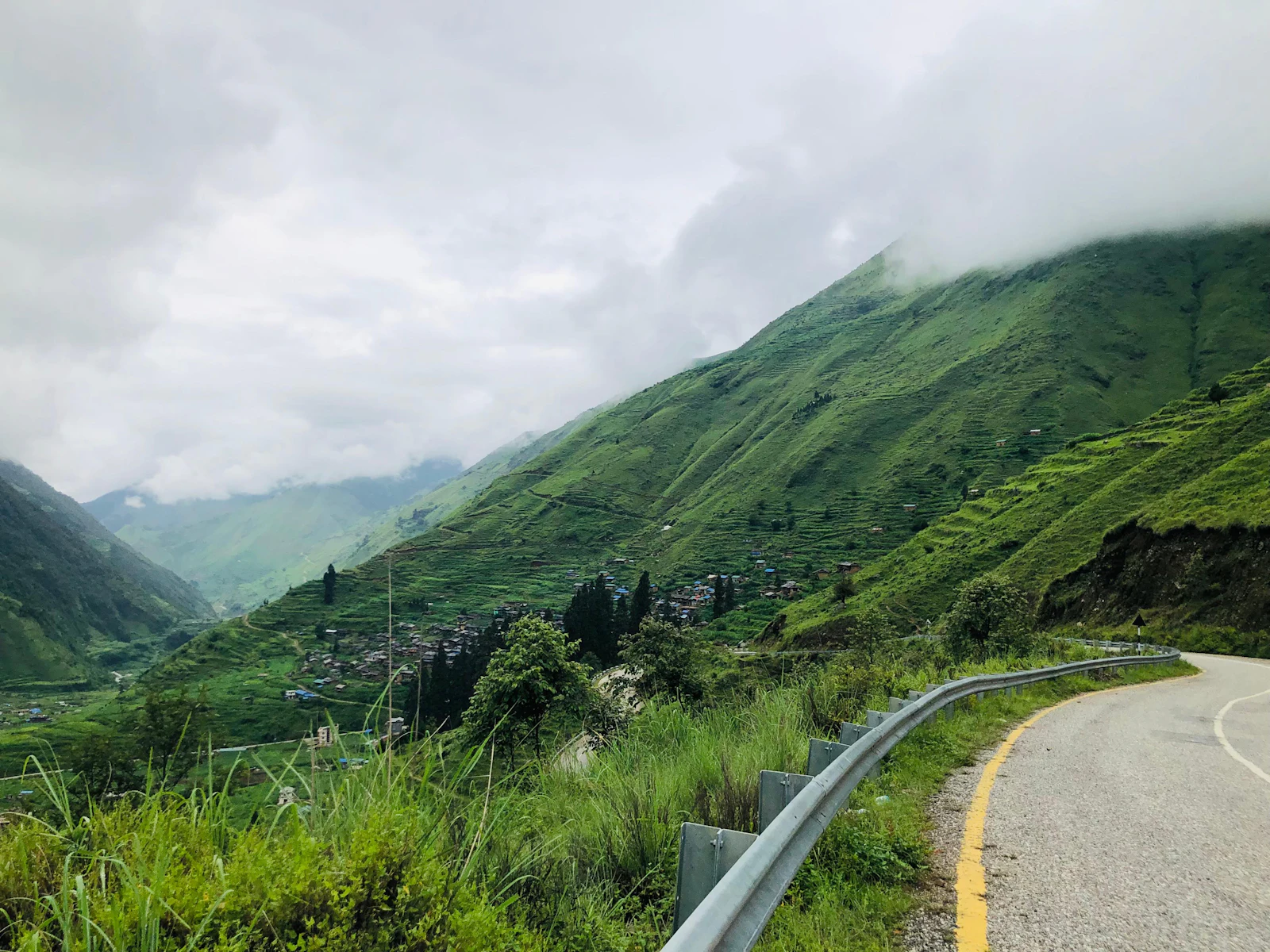
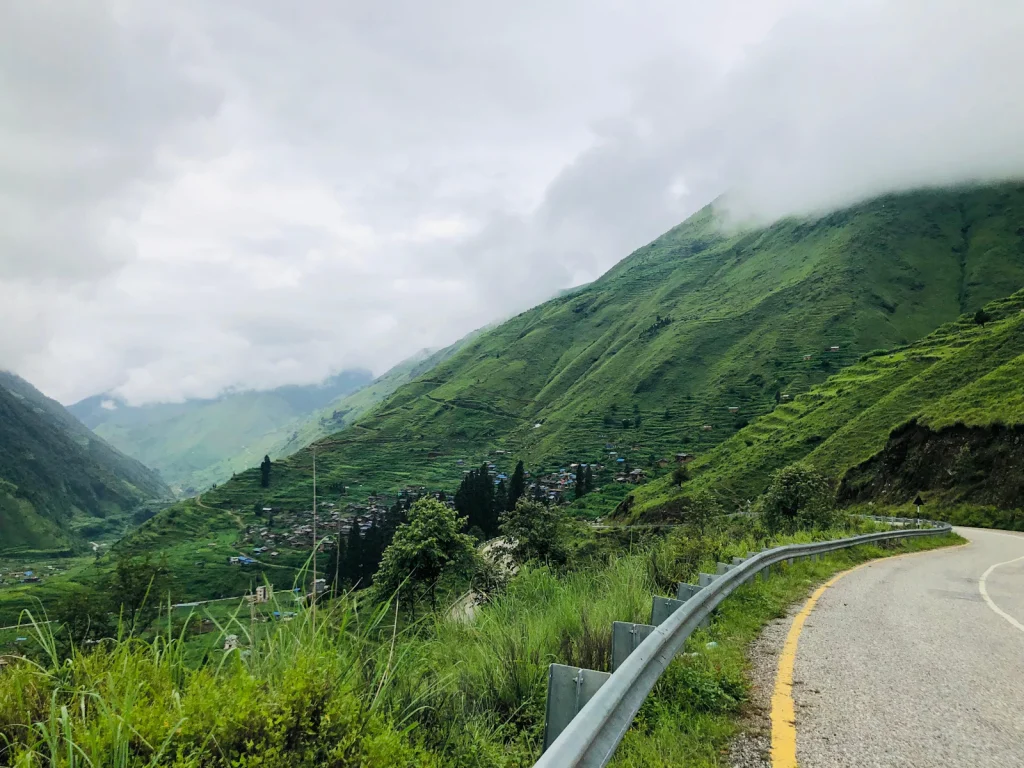
Mountain roads bring a different set of hazards: narrow ledges, big drops, rockfall, water crossings, and machinery clearing debris. On a one-lane section, give way to larger vehicles and pull in on the safest side, which may not be the side you expect. Never stop right under a fresh slide or a loose slope to take photographs.
Weather causes the biggest disruptions. Canada notes that many mountain and hill roads are intermittently impassable during the monsoon from June to September. And it is not only a monsoon problem. At the end of October 2026, in what is normally the best riding season, Cyclone Arnab blocked the Jomsom–Korala road with landslides in two sections and left two to three feet of snow around Korala. Blocked roads were reported open again within days, which is typical: conditions change fast in both directions.
Some practical rules for the hills:
- Build in spare days. A tight itinerary is what pushes riders to keep going when they should wait. Allow at least one or two buffer days on a mountain trip.
- Wait after heavy rain. Slides often follow the rain, not just come with it. A few hours’ delay costs far less than being caught below a moving slope.
- Start early. Mornings tend to be calmer, and starting early leaves you time to deal with problems before dark.
- Ask locally. Lodge owners, jeep drivers and checkpoint staff usually know more than any website. Ask the night before and again in the morning.
- Cross water carefully. Check depth and current first, and walk it if you are unsure. Streams fed by snowmelt or rain can rise during the day.
- Go through slide zones one at a time. Do not bunch up, and do not stop until you are clear.
For road conditions this season, read our route update after the 2026 floods and our Manang road guide.
Altitude
Altitude is the risk riders most often underestimate, because a bike can carry you up far faster than your body can adjust. The Nepal Tourism Board advises raising your sleeping altitude by no more than 300–500 m a day above 2,500 m, with a rest day for every 1,000 m gained, and treating any illness above 2,500 m as possible altitude sickness until proven otherwise. A headache and tiredness can also affect your judgement and balance on the bike long before you feel seriously ill.
Serious altitude sickness can kill. If symptoms worsen, go down. Do not wait until morning if you are getting rapidly worse, and do not ride yourself down if you are unsteady or confused. Our guide to altitude sickness on a motorbike has the detail. See a doctor before you travel, especially if you have a heart or lung condition. This guide is general information, not medical advice.
Medical care and evacuation
Canada’s travel advice says that facilities outside the Kathmandu Valley and Pokhara are well below Canadian standards, that many hospitals want upfront payment or proof of insurance, and that serious cases often need evacuation to Bangkok, New Delhi or Singapore. On a remote road, help may also be many hours away, and phone coverage may fail just when you need it.
- Carry a proper first-aid kit and learn to use it. A short first-aid course before your trip is a good investment.
- Know your insurer’s 24-hour assistance number and save it on paper as well as on your phone.
- Share your route and expected arrival time with someone each day.
- Consider a satellite messenger on remote routes, where phone coverage is unreliable.
- The medical emergency number listed by Canada is 102. Do not rely on an ambulance reaching a remote road quickly.
Be careful about evacuation, too. Canada warns of documented scams, including unnecessary helicopter evacuations and inflated bills. It advises using registered companies, getting a medical evaluation first if you can, and keeping copies of all your documents. Call your insurer before you agree to anything, unless it is a true emergency.
Want help planning a safer route?
Send us your dates and riding experience. We will suggest a route and timing that suit you and send a day-by-day plan.
Insurance: the part riders get wrong
Do not assume your travel insurance covers this trip. Many standard policies do not, and you may only find out after an accident. Finder’s review of Australian policies found that many insurers limit cover by engine size, often to 250cc, and that some allow less. Policies generally require a helmet and a valid licence for the bike, and standard cover generally excludes off-road riding on unsealed roads.
Those conditions matter here. A Royal Enfield Himalayan is well over 250cc, and the road to Mustang or Manang is largely unsealed. Policies differ by insurer and by country, so before you buy, get written answers to these questions:
- Does it cover riding a motorcycle of this engine size, as the rider and not just a passenger?
- Does it cover riding on unsealed roads and tracks?
- What is the maximum altitude, and does it apply to riding as well as trekking?
- Does it include helicopter evacuation and medical repatriation, and for how much?
- What licence do I need? Does it require a full motorcycle licence at home and an International Driving Permit?
- What is excluded? Look for riding at night, riding with a pillion, third-party injury, and damage to the hired bike.
Keep the replies with your policy documents. Hired bikes in Nepal may also have limited cover, or none, so ask what you are liable for and photograph the bike before you ride off.
What to do after a crash
- Make the scene safe. Move out of the traffic if you can and warn oncoming vehicles, particularly on bends.
- Treat injuries first. Do not move anyone with a suspected head, neck or back injury unless they are in immediate danger.
- Call for help. Contact your guide, operator or rental company, then the emergency services and your insurer’s assistance line.
- Stay calm with bystanders. Australia’s advice warns that locals often assume foreigners are at fault, that you may be asked for money, and that crowds can turn hostile quickly. If you feel unsafe, move to safety and wait for the police.
- Record everything. Take photos of the scene and the vehicles, and get a police report if you can, as your insurer may ask for one.
- Contact your embassy if you are seriously hurt, detained or in a dispute. If legal issues arise, get proper local legal advice.
Guided or self-riding: which is safer?
A guided tour does not make the road safer, but it does change what happens when things go wrong. You have someone who knows the road and can read the conditions, and depending on the tour, a mechanic and support vehicle as well. Someone else handles permits and rerouting, and that also takes the pressure off when you need to decide whether to wait out bad weather.
Self-riding gives you freedom and costs less, and plenty of experienced riders do it well. It suits riders with several years of experience, some gravel skills and the confidence to turn back. It does not work everywhere: Upper Mustang requires a licensed guide. If you are comparing, see our pages on guided tours and self-guided tours, and our guide to how hard each route is.
Whoever you ride with, ask what happens in an emergency. Who carries first aid? Is there a mechanic? What is the evacuation plan? A good operator should answer these clearly and in writing.
Safety checklist
- Choose a route that matches your real experience, not your ambitions.
- Avoid the monsoon for hill and mountain routes unless you have lots of flexibility.
- Bring a well-fitting certified helmet from home, plus armoured jacket and trousers, boots and gloves.
- Get written confirmation of your insurance cover.
- Carry your licence, International Driving Permit and any permits.
- Check the bike every morning: tyres, brakes, chain, lights and fuel.
- Ride during daylight, and plan to stop well before dark.
- Add buffer days to your schedule.
- Follow altitude guidelines, and take symptoms seriously.
- Never drink and ride.
Frequently asked questions
Is it safe to ride a motorcycle in Nepal?
It can be reasonably safe if you pick a route that suits your skills, ride in daylight, avoid the monsoon on hill roads and carry the right insurance. It still carries more risk than riding in most visitors’ home countries, and serious medical care can be far away.
Is it safe to ride a motorcycle in Kathmandu?
It is mostly slow, but it is crowded and chaotic. Many visitors find it stressful, so start early in the day, ride defensively and consider getting a feel for the traffic with someone local on your first ride.
Is it safe to ride in Nepal during the monsoon?
It is significantly riskier. Many hill and mountain roads are intermittently blocked by landslides from June to September. Upper Mustang is in a rain shadow, but you still have to get through wetter hills to reach it.
Do you have to wear a helmet in Nepal?
Yes. Helmets are mandatory for motorcyclists, and most insurers require one too. Australia warns that helmets bought in Nepal may not meet its safety standards, so bring your own or check carefully.
Should I ride at night in Nepal?
No. Canada and Australia both advise against it, and night travel bans have been imposed on highways during heavy rain.
Does travel insurance cover motorbikes in Nepal?
Only some policies do. Many limit engine size and exclude unsealed roads, so check engine size, off-road riding, altitude and helicopter evacuation in writing before you buy.
Is Nepal safe for solo riders?
Experienced riders do it, but a breakdown or crash on a remote road is much more serious when you are alone. Share your route daily and consider a satellite messenger, or hire a guide for remote sections. Upper Mustang cannot be ridden independently.
Plan a ride that suits your experience
Tell us your dates, your riding background and the route you have in mind. We will reply with a day-by-day plan and an itemised quote.
Sources
- Republica: Nepal records 82 road accidents, seven deaths every day
- Kathmandu Post: Nepal sees at least 75 road accidents daily (26 Jan 2025)
- Government of Canada: Nepal travel advice (updated 3 Nov 2026)
- Australian Government Smartraveller: Nepal
- Nepal Tourism Board: safety in the mountains
- Finder: motorcycle travel insurance
- Khabarhub: heavy snowfall and rain in Mustang (31 Oct 2026)
- Spotlight: Cyclone Arnab’s impact ends in Nepal (1 Nov 2026)
- Kantipur: nighttime travel halted on major highways (24 Sep 2026)
Last checked 3 November 2026.