Muktinath Temple, Nepal: Complete Visitor Guide
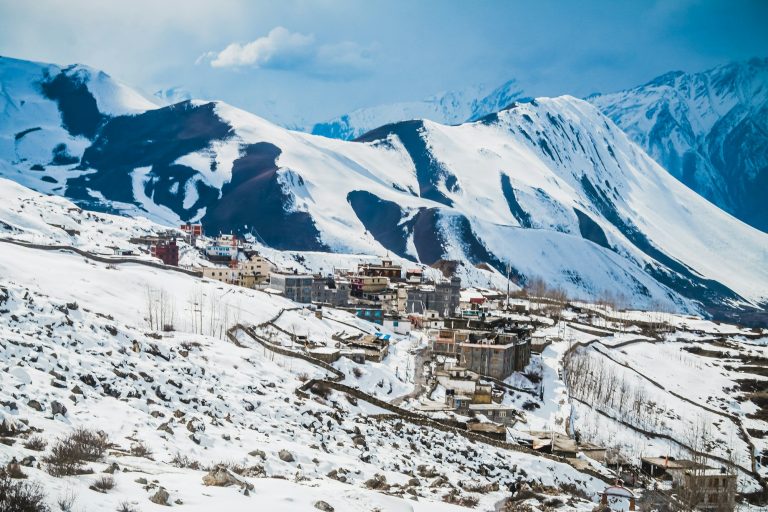
Muktinath is one of the holiest places in the Himalaya and one of very few shrines revered equally by Hindus and Buddhists. A small pagoda temple to Vishnu, a semicircle of 108 water spouts, a flame that burns over running water and a cluster of Tibetan gompas sit together on a bare hillside at the head of the Muktinath valley in Mustang, just below the 5,416 m Thorong La pass.
Tens of thousands of pilgrims — the great majority from India — make the journey every year, along with trekkers finishing the Annapurna Circuit and riders on the classic Kali Gandaki road. This guide explains why Muktinath is sacred, what you will see there, how to get there by road, air or motorbike, what it costs, when to go and how to avoid altitude sickness.
| Muktinath temple at a glance | |
|---|---|
| Location | Muktinath valley, Mustang district, Gandaki Province, Nepal |
| Altitude | About 3,710–3,800 m (12,200–12,500 ft); sources differ |
| Nearest village | Ranipauwa, about 10–20 minutes’ walk below the temple |
| Deity | Vishnu as Shri Muktinarayan; Avalokiteshvara (Chenrezig) for Buddhists |
| Distance from Jomsom | About 20–25 km by road |
| Distance from Pokhara | About 175–185 km by road |
| Permit | ACAP — NPR 3,000 for foreigners, NPR 1,000 for SAARC nationals (including Indians) |
| Entry fee | No temple entry fee is charged; donations welcome |
| Best time | March–May and late September–November |
In this guide
- Where is Muktinath temple located?
- Why Muktinath is sacred
- What to see at Muktinath
- How to get to Muktinath
- Visiting the temple: hours, rules and tips
- Muktinath altitude and altitude sickness
- Best time to visit Muktinath
- Places to visit near Muktinath
- Where to stay and eat
- Legends and history of Muktinath
- Suggested Muktinath itineraries
- What to pack for Muktinath
- FAQs
Where is Muktinath temple located?
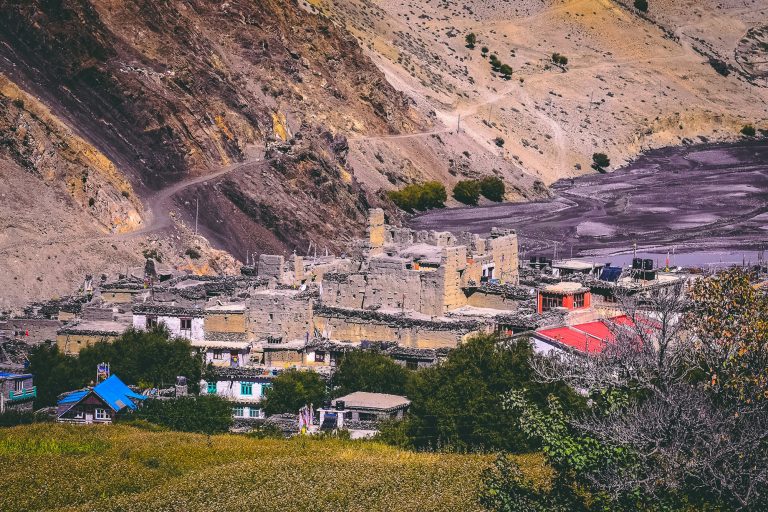
Muktinath stands in the upper Muktinath valley in Mustang district, north-central Nepal, east of the Kali Gandaki river and directly beneath the Thorong La, the highest point of the Annapurna Circuit. The temple complex sits a short walk above the village of Ranipauwa, where you will find the car park, helipad, lodges and shops.
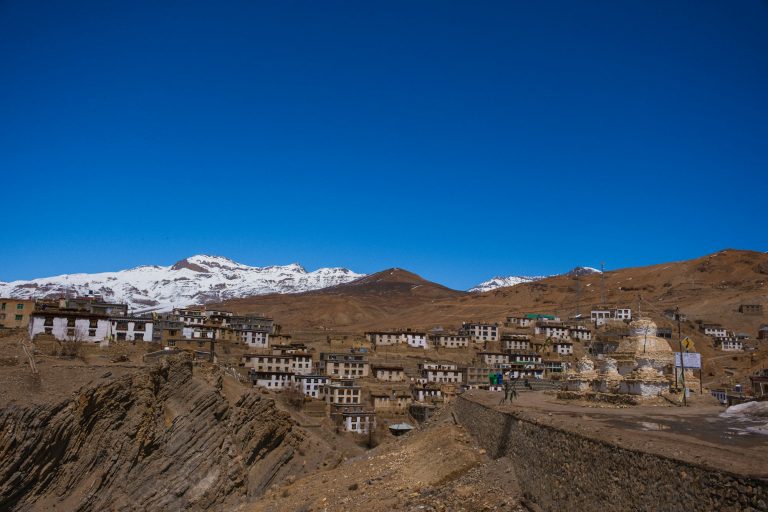
It is in Lower Mustang, not Upper Mustang — so you do not need the expensive restricted-area permit, only the ACAP permit. From Jomsom, the district headquarters, it is about an hour by jeep or motorbike via Eklebhatti and Kagbeni; from Pokhara it is roughly 175–185 km by road.
Why Muktinath is sacred
For Hindus
Muktinath means “Lord of Liberation”. Hindus worship Vishnu here as Shri Muktinarayan, and believe that bathing in the sacred waters and worshipping at the temple brings moksha — liberation from the cycle of rebirth. Muktinath is one of the 108 Divya Desams of Sri Vaishnavism, the shrines praised in the Tamil hymns of the Alvar saints, and one of eight Svayam Vyakta (“self-manifested”) shrines of Vishnu. Together with Pashupatinath, Barahachhetra and Janakpurdham it is counted among the four great dhams of Nepal.
It is also one of the 51 Shakti Peethas, the places where parts of the goddess Sati’s body are said to have fallen; here the goddess is worshipped as Gandaki Chandi. The nearby Kali Gandaki is the only source of shaligrams, black ammonite fossils worshipped as natural forms of Vishnu, which pilgrims buy or search for along the riverbed.
For Buddhists
Tibetan Buddhists call the site Chumig Gyatsa, “a hundred springs”. It is one of 24 sacred places associated with Guru Rinpoche (Padmasambhava), who is said to have meditated here in the 8th century on his way to Tibet, and it is linked to the dakinis, female sky-dancers. For Buddhists the image in the main temple is Avalokiteshvara (Chenrezig), the bodhisattva of compassion. Buddhist nuns tend parts of the complex and conduct worship during the day, while a Hindu priest performs the morning puja and evening aarti — a rare example of two faiths sharing one shrine in daily practice.
What to see at Muktinath
The main temple
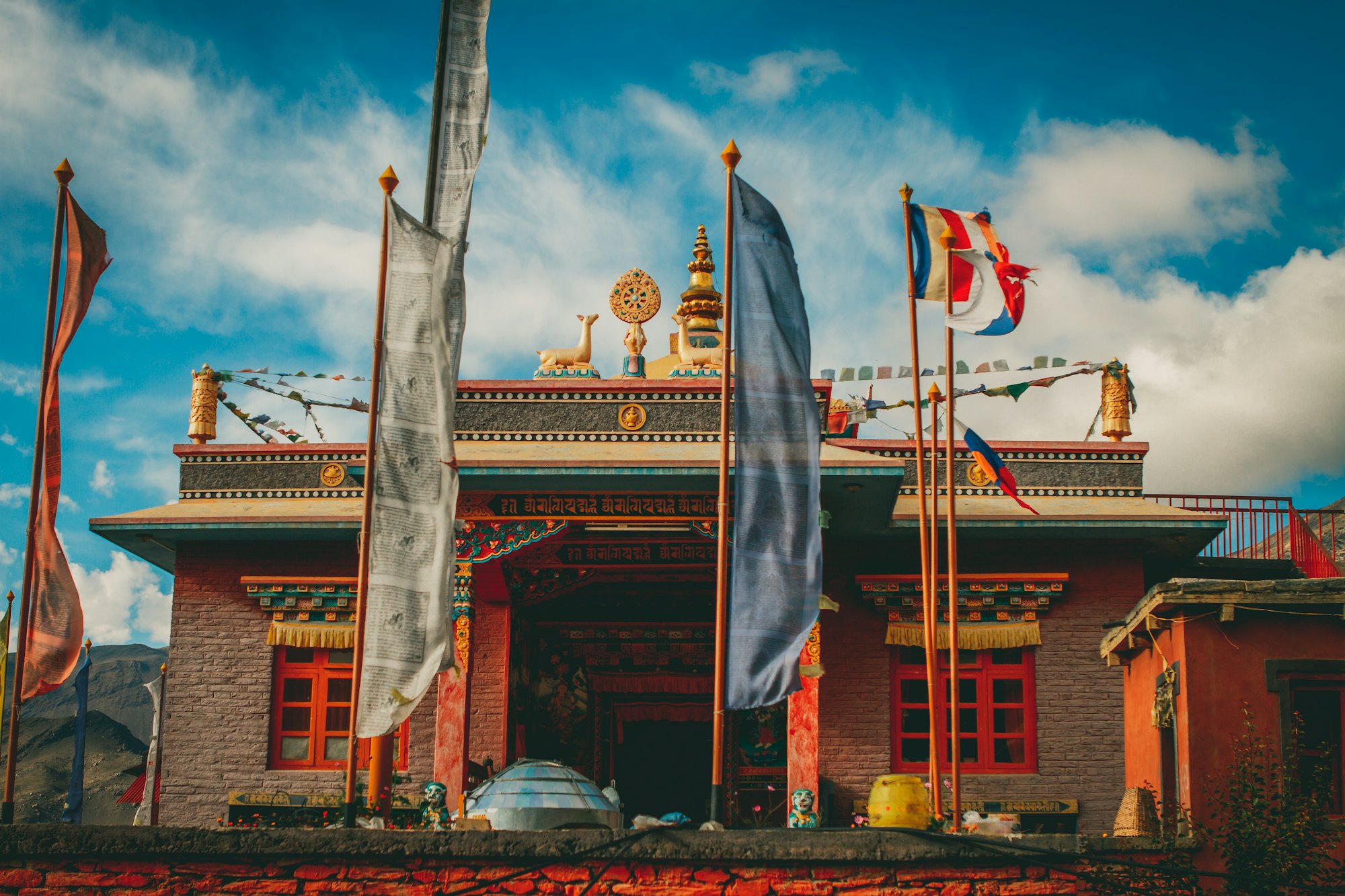
The temple is a small three-tiered pagoda in the Nepali style, set in a grove of trees — an unusual sight at this altitude. Inside is a roughly life-sized golden image of Vishnu as Muktinarayan, flanked by goddesses. Historians trace worship at the site back around 2,000 years; the present temple building dates from the early 19th century and has been renovated several times since, most recently in 2012.
The 108 water spouts (Mukti Dhara)
Behind the temple, 108 bull-headed spouts arranged in a semicircle pour icy water fed by springs. Pilgrims — often barefoot and bare-chested — run under each spout in turn to wash away their sins. The number 108 is sacred in both Hinduism and Buddhism; one common explanation is the 12 signs of the zodiac multiplied by the nine planets. The water is close to freezing, so bring a towel and dry clothes.
The two sacred ponds
In front of the temple are two kunds (ponds) in which pilgrims bathe before entering. They are commonly called the Lakshmi Kund and Saraswati Kund, although some guides refer to one of them as the Mukti Kund.
Jwala Mai and the eternal flame
A short walk from the main temple is the Dhola Mebar Gompa (also known as Jwala Mai to Hindus). Inside, small blue flames of natural gas burn above a trickle of spring water and on bare stone — “fire on water” — a phenomenon that has made Muktinath sacred for millennia. Look through the small opening at the base of the altar to see them.
Gompas of the complex
- Mharme Lhakhang — a gompa with a large clay statue of Guru Rinpoche, cared for by nuns.
- Sangdo Gompa — near the gate, originally founded by a 19th-century lama and rebuilt by villagers from Khinga and Jharkot.
- Footprints said to be those of Guru Rinpoche, shown to visitors on a stone.
How to get to Muktinath
By road from Pokhara
The road runs from Pokhara to Beni (about 80–90 km, paved), then up the Kali Gandaki via Tatopani, Ghasa, Marpha and Jomsom (about 155 km from Pokhara in total), and on via Kagbeni to Ranipauwa. Most of the Beni–Jomsom road is now paved, but sections in the gorge remain rough and are prone to landslides in the monsoon. There is no direct bus; you change at Beni and usually again at Jomsom.
| Option | Time | Approx. cost |
|---|---|---|
| Local bus Pokhara–Beni–Jomsom | 8–10 hours, often with a change | A few thousand rupees per person |
| Private jeep Pokhara–Muktinath | 2 days recommended | USD 250–450 per vehicle |
| Local bus Jomsom–Muktinath | 1.5–3 hours | About USD 2–3 |
| Reserved jeep Jomsom–Muktinath | About 1 hour | About USD 40–45 per vehicle |
| Motorbike from Pokhara | 2 days each way | Bike hire USD 40–115/day plus fuel |
Prices are approximate and change with fuel costs and season. The road from Jomsom to Kagbeni is blacktopped, and the climb from Kagbeni to Ranipauwa is paved most of the way.
Latest: the Beni–Jomsom road was blocked in many places by floods in late September 2026 and reopened on 9 October. Always check road conditions between June and early October.
By air
When they operate, Tara Air and Summit Air fly Pokhara–Jomsom in 20–25 minutes, early morning only. From Jomsom, take a jeep or bus to Ranipauwa. The route is seasonal and was suspended over winter 2025–26 and again from around 20 October 2026, so check before booking. There are no flights directly to Muktinath.
By helicopter
Helicopter tours fly from Pokhara or Kathmandu, land at Ranipauwa for about an hour and return the same day. From Pokhara, a private charter costs roughly USD 2,500–3,000, or around USD 700–1,500 per person when shared; from Kathmandu, expect USD 3,000–5,500 for a charter. It is quick, but flying from 800 m to 3,700 m in under an hour is hard on the body — walk slowly and keep the visit short.
By motorbike
The ride to Muktinath is the most popular motorbike journey in Nepal: two days from Pokhara through the deepest gorge on Earth, with nights at Tatopani hot springs and in apple-growing Marpha. Lower Mustang needs only an ACAP permit, so you can self-ride on a bike from a Pokhara rental shop, or join our guided Pokhara to Muktinath motorbike tour. Read the Pokhara to Muktinath road guide before you go.
On foot
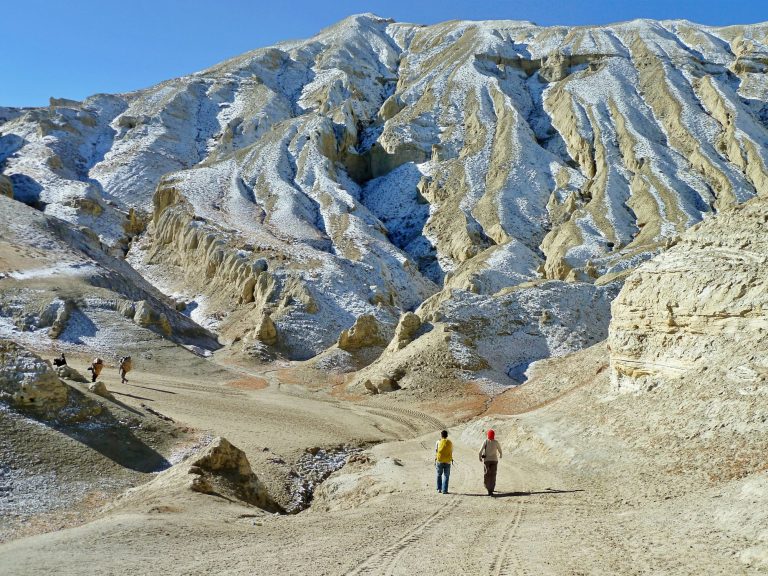
Annapurna Circuit trekkers arrive from the east over the Thorong La (5,416 m) and descend to Muktinath — one of the great arrivals in trekking. Others walk up from Jomsom via Kagbeni in one or two days.
Ride to Muktinath, not just visit
Six days from Pokhara through the Kali Gandaki gorge, with nights in Marpha and Kagbeni to acclimatise.
Visiting the temple: hours, rules and tips
- Opening hours: the complex is generally open from early morning until dusk. Morning puja is the best time to visit, before the wind and crowds.
- The walk: from the Ranipauwa gate it is about 10–20 minutes uphill on steps and paths. At this altitude go slowly. Ponies and, for those who need them, porters can be hired.
- Dress: cover shoulders and knees. Remove shoes before entering the temple and gompas, and leather items where asked.
- Photography: photographs of the exterior and the water spouts are fine; do not photograph inside the sanctum or during rituals without permission.
- Bathing: bring a towel and spare clothes if you plan to bathe under the spouts. Changing areas are basic.
- Offerings: flowers, incense and offerings are sold in Ranipauwa. Donations support the temple and its upkeep.
- Crowds: during Indian holidays and in summer, visitor numbers can be huge — on the busiest days of summer 2026 more than 15,000 people visited in a day. Early mornings are calmest.
Muktinath altitude and altitude sickness
Muktinath sits at roughly 3,710–3,800 m — sources differ depending on whether they measure the temple, the gate or Ranipauwa village. That is high enough to cause acute mountain sickness (AMS), and Mustang has seen a rising number of altitude deaths, mostly among older pilgrims who drove straight up from the plains. Sixteen people died of altitude sickness in Mustang in the year to mid-July 2026.
- Do not travel from Pokhara (about 820 m) to Muktinath in one day. Spend at least one night in Marpha, Jomsom or Kagbeni.
- Watch for headache, nausea, dizziness and fatigue — the early signs of AMS. Do not go higher with symptoms.
- Confusion, loss of coordination or breathlessness at rest are emergencies: descend at once and seek help.
- The provincial hospital in Jomsom runs a seasonal high-altitude post with oxygen near the temple.
More detail in altitude sickness in Mustang.
Best time to visit Muktinath
The temple is open all year. March to May and late September to November offer the best combination of weather, clear views and open roads. June to September is dry at Muktinath itself thanks to the rain shadow, but the road below Jomsom suffers landslides and flights are unreliable. Winter is clear but very cold, and snow can close the road above Jomsom for a few days at a time.
Festivals bring colour and crowds: the Yartung horse festival in late summer ends with races up to Ranipauwa, and Hindu festivals such as Janai Purnima draw large numbers of pilgrims. See the best time to visit Mustang.
Places to visit near Muktinath
- Jharkot — a fortified village with a ruined fort and a Sakya monastery, 20 minutes below Ranipauwa.
- Jhong — a hilltop village with a ruined dzong across the valley, with views into Upper Mustang.
- Kagbeni — the medieval gateway to Upper Mustang, where Hindu pilgrims perform ancestral rites at the river confluence. See Kagbeni and Marpha.
- Jomsom and Marpha — the district HQ and the prettiest Thakali village. See the Jomsom guide.
- Upper Mustang and Lo Manthang — with a restricted-area permit and guide. See the Lo Manthang guide.
Where to stay and eat
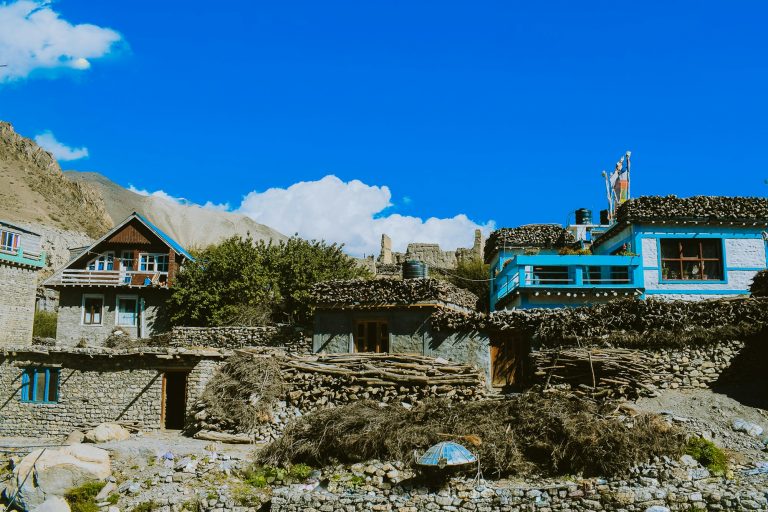
Ranipauwa has dozens of lodges and guesthouses, from simple rooms with shared bathrooms to comfortable hotels with attached bathrooms and hot showers. Many cater to Indian pilgrims with vegetarian thalis; Thakali dal bhat, momos and Tibetan bread are everywhere. Kagbeni and Jharkot are quieter alternatives, and sleeping a little lower helps with acclimatisation. Book ahead during festivals and Indian holiday periods.
Legends and history of Muktinath
Muktinath’s story is told differently by each tradition, which is part of its fascination. In Hindu belief, the site is where Vishnu took the form of a shaligram stone after being cursed by Vrinda, the devoted wife of the demon Jalandhara — which is why the ammonites of the Kali Gandaki are worshipped as Vishnu himself. The Vishnu Purana and other texts refer to the area as Shaligram Kshetra or Mukti Kshetra, “the place of liberation”.
Tibetan accounts tell how Guru Rinpoche, travelling to Tibet in the 8th century, stopped at Chumig Gyatsa and meditated among the springs, subduing local spirits; the dakinis of the site are said to have assisted him. The flames burning over water in the Dhola Mebar Gompa are interpreted by Buddhists as a manifestation of the five elements meeting in one place.
Historically the temple sat on the busy trade route between Tibet and the Indian plains, and pilgrims from India have walked here for centuries — a journey that, until the road reached Muktinath in the 2000s, took weeks on foot from the plains. Royal patronage from Nepal’s rulers paid for repairs and the present pagoda, while local Baragaun villages — Khinga, Jharkot, Jhong and Purang — continue to look after the Buddhist shrines. The rest house that gives Ranipauwa (“the queen’s rest house”) its name is more than two centuries old.
Suggested Muktinath itineraries
| Trip | Days | Outline |
|---|---|---|
| Fly and drive (when flights run) | 3 | Day 1 fly Pokhara–Jomsom, drive to Kagbeni; Day 2 Muktinath and back to Jomsom; Day 3 fly back |
| Jeep tour from Pokhara | 4–5 | Pokhara–Tatopani; Tatopani–Kagbeni; Muktinath and Jomsom; Jomsom–Pokhara (or overnight at Tatopani) |
| Motorbike tour from Pokhara | 6 | Pokhara–Tatopani; Tatopani–Marpha; Marpha–Kagbeni–Muktinath; Muktinath–Tatopani; Tatopani–Pokhara, plus a briefing day |
| From Kathmandu by road | 8–10 | Kathmandu–Pokhara by road, then one of the routes above |
| Helicopter day trip | 1 | Pokhara–Muktinath–Pokhara with about an hour on the ground |
For riders, the six-day version gives the best balance of time in the saddle, acclimatisation and sightseeing — see the Pokhara to Muktinath motorbike tour, or the longer Lower Mustang and Muktinath tour from Kathmandu.
What to pack for Muktinath
- Warm layers and a down jacket — mornings are below freezing for much of the year.
- Windproof jacket, sunglasses and a buff or mask for the dusty afternoon wind.
- Sunscreen and lip balm — UV is intense at 3,700 m.
- A towel and spare clothes if you plan to bathe at the spouts.
- Slip-on shoes for taking off and on at the shrines.
- Cash in Nepali rupees; ATMs in the area can be unreliable.
- Your passport and ACAP permit for checkpoints.
- Any personal medication, plus a basic first-aid kit and altitude medication discussed with your doctor.
Frequently asked questions
Where is Muktinath temple located?
In the Muktinath valley of Mustang district, north-central Nepal, at the foot of the Thorong La pass, about 20–25 km from Jomsom and 175–185 km from Pokhara.
What is the height of Muktinath temple?
About 3,710–3,800 m (12,200–12,500 ft) above sea level, depending on the source.
Which god is worshipped at Muktinath?
Vishnu as Shri Muktinarayan. Buddhists venerate the same image as Avalokiteshvara.
Why is Muktinath famous?
It is sacred to both Hindus and Buddhists, is one of the 108 Divya Desams and a Shakti Peetha, and has 108 water spouts and a natural flame burning over water.
How many steps are there at Muktinath?
There is no fixed count; it is a 10–20 minute uphill walk on steps and paths from the gate at Ranipauwa.
Do I need a permit to visit Muktinath?
Yes, the ACAP permit (NPR 3,000 for foreigners, NPR 1,000 for SAARC nationals). No restricted-area permit is needed.
Is there an entry fee for Muktinath temple?
No temple entry fee is charged; donations are welcome.
How do I get to Muktinath from Pokhara?
By road via Beni and Jomsom (two days recommended), by seasonal flight to Jomsom plus a jeep, or by helicopter.
Can I visit Muktinath in winter?
Yes, but it is very cold and snow can temporarily close the road above Jomsom.
Can I get altitude sickness at Muktinath?
Yes. Ascend gradually with a night at Jomsom, Marpha or Kagbeni and descend if symptoms worsen.
Ride to Muktinath
Six days from Pokhara through the Kali Gandaki gorge, with a guide, mechanic and ACAP permit included.