Rara Lake by Motorbike: Is the Long Ride West Worth It?
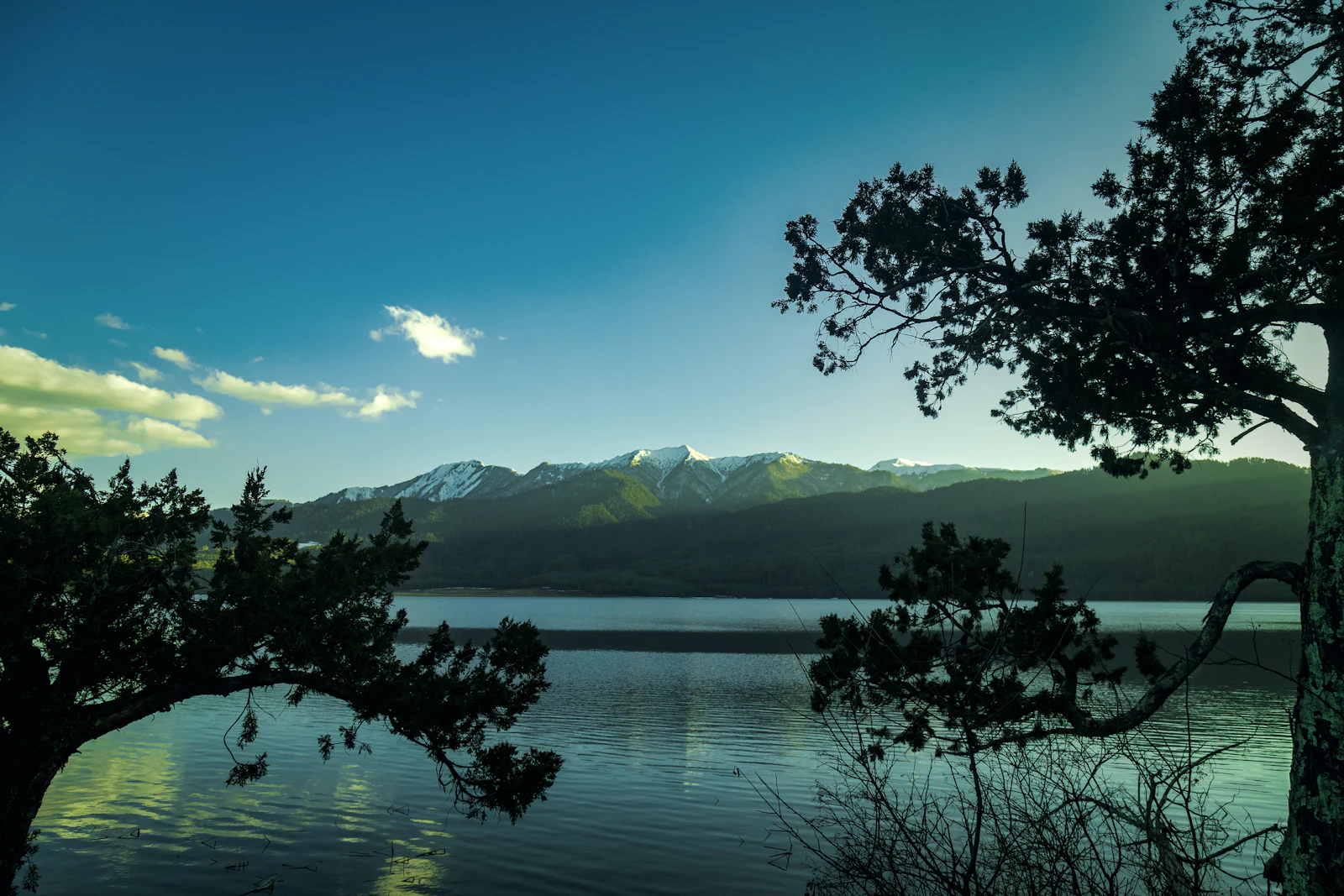
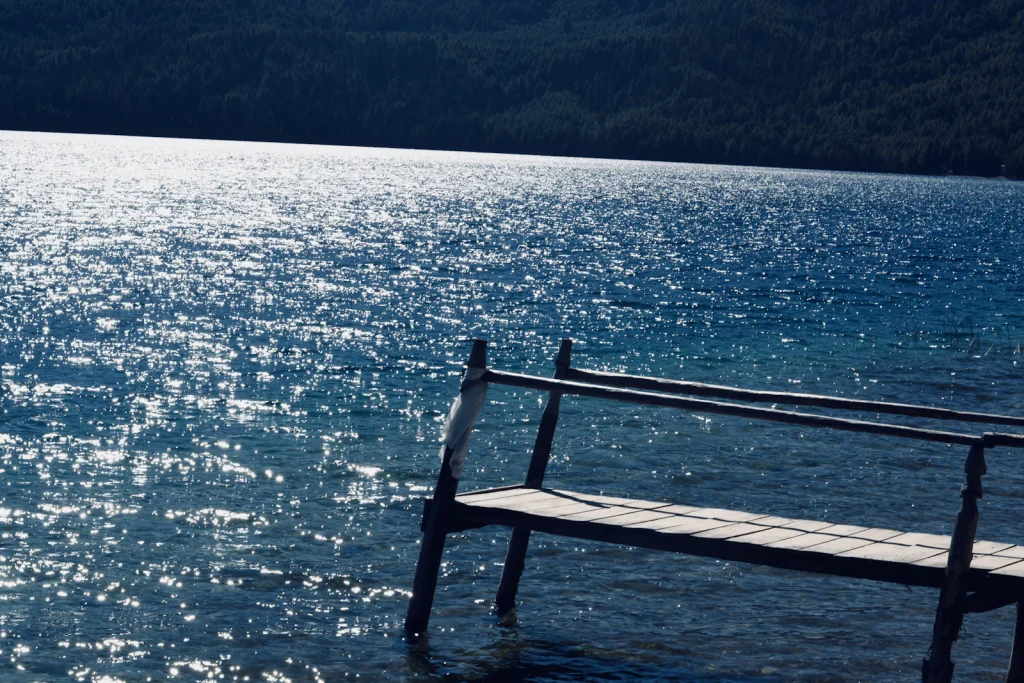
Rara Lake is Nepal’s largest lake, a 10.8 km² sheet of blue water at about 2,990 m in the far-western Karnali Province, and riding there is one of the longest, roughest motorbike trips in the country. This guide covers whether you can actually ride to the lake, the route from Kathmandu, what the Karnali Highway is like in 2026, current road status, fuel, fees, the best months and an honest answer to whether the ride is worth it.
It is written for riders who have already looked at the classic routes. If you are still choosing, start with our route difficulty guide or the list of Nepal motorbike tours.
In this guide
- Rara Lake at a glance
- What is Rara Lake?
- Can you ride a motorbike to Rara Lake?
- The route from Kathmandu to Rara
- What is the Karnali Highway like?
- The last stretch: Nagma, Talcha and the park gate
- Road status now
- Fuel, repairs and supplies
- Best time to ride to Rara
- Fees, rooms and signal at Rara
- Is the ride to Rara worth it?
- Frequently asked questions
Rara Lake at a glance
| Fact | Detail |
|---|---|
| Where | Mugu and Jumla districts, Karnali Province, far-western Nepal |
| Altitude | About 2,990 m |
| Size | 10.8 km², about 5.1 km long and 2.7 km wide; up to 167 m deep |
| Protected area | Rara National Park (106 km², gazetted 1976) with a 198 km² buffer zone; Ramsar wetland since 2007 |
| Nearest road end | The park boundary near Talcha airport, Mugu; bikes are parked and you walk the last 40 minutes or so |
| Main road in | Karnali Highway from Surkhet through Dailekh and Kalikot, then the Nagma–Gamgadhi road |
| Ride from Kathmandu | Roughly 900–1,000 km each way; most riders allow 8–10 days for the round trip |
| Park entry | NPR 3,000 per foreigner per entry; NPR 1,500 for SAARC nationals |
| Best months | October–November and March–April |
| Riding level | Hard: long days, broken tarmac, gravel, mud, landslides and very few services |
What is Rara Lake?
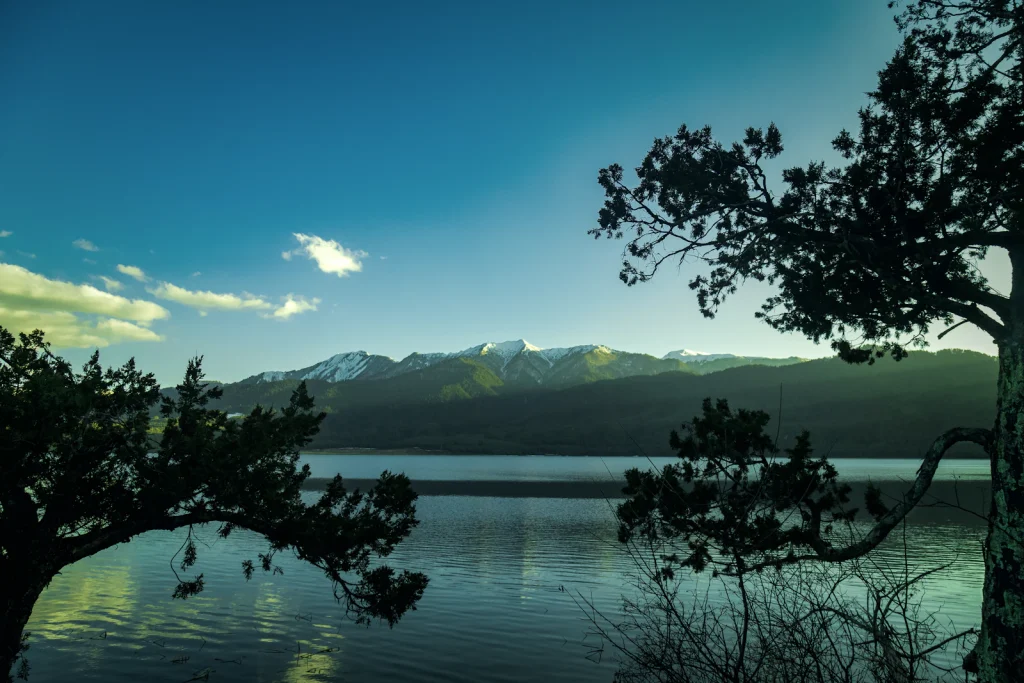
Rara Lake is the largest freshwater lake in Nepal and the centrepiece of Rara National Park. It sits at about 2,990 m on the border of Mugu and Jumla districts, ringed by blue pine, spruce and juniper forest, with the park rising to 4,039 m at Chuchemara peak.
The park was set up in 1976 to protect the lake; residents of Rara and Chapra villages were resettled to the lowlands at the time. Its forests hold red panda, musk deer, Himalayan black bear and leopard, the lake has three endemic snow trout species, and the Nepal Tourism Board counts around 214 bird species in winter, including grebes, ducks and gulls. The lake and its surrounding wetland became a Ramsar site in September 2007.
What makes Rara different for a rider is how few people reach it. The park recorded 24,931 visitors in the 2025/26 fiscal year, and only 201 of them were from outside South Asia, according to The Rising Nepal (Sept 2026). Compare that with the crowds at Muktinath and you get the point. The catch is the road, which is the next question.
Can you ride a motorbike to Rara Lake?
You can ride a motorbike to the edge of Rara National Park, but not to the lakeshore. Bikes are parked at the park boundary, about an hour’s ride from Talcha airport, and the last stretch to the lake is a walk of around 40 minutes. Vehicles are not allowed inside the park without permission.
Several sources agree on this. A Buddha Air guide gives a 40-minute walk from the park entrance at Salleri and notes that vehicles need permission to enter the park; horses can be hired for the walk. A 2016 ride report from DamnPilot describes army posts at Bulbule and Talcha warning riders that motorbikes are prohibited inside the park. Park officials have also said no new roads or structures will be allowed near the lake (Kathmandu Post, Feb 2023).
So treat Rara as a ride to a viewpoint plus a short walk, not a lakeside parking spot. Most riders spend a full day on foot there: around the lake, out on a boat, or up to Murma Top (about 3,726 m) for the view over the water. The ride itself is the hard part, and it starts a long way south.
The route from Kathmandu to Rara
The usual route from Kathmandu to Rara runs west along the main highways to Kohalpur near Nepalgunj, north to Surkhet, up the Karnali Highway through Dailekh and Kalikot to Nagma, then east on the Nagma–Gamgadhi road to Talcha and the park gate. The stages below come from published ride logs and itineraries; treat them as a guide, not a schedule.
| Stage | Distance | What to expect |
|---|---|---|
| Kathmandu to Kohalpur (often split at Butwal or Lumbini) | About 500 km | Busy sealed highways through the Terai; usually two days |
| Kohalpur to Manma (Kalikot) via Surkhet | About 250 km | Hills to Surkhet, then the Karnali Highway: narrow, broken and slow |
| Manma to Talcha (Mugu) via Nagma | About 150 km | Tarmac ends around Nagma; dirt, dust, small streams and steep climbs |
| Talcha to the park boundary | Short ride | About an hour, then park the bike and walk to the lake |
| Rara back to Jumla | About 120 km | Return to Nagma, then about 40 km to Jumla |
| Jumla to Surkhet | About 230–240 km | The full Karnali Highway; a long, tiring day |
Figures are from the DamnPilot ride log, a published operator itinerary and the Kathmandu Post’s 232 km figure for Jumla to Surkhet. Put together, a return ride from Kathmandu is about 2,000–2,150 km. Most people allow eight to ten days, with at least one spare day for a landslide. A Ratopati rider’s account (Oct 2026) from Bhairahawa took eight days in total, including one night at the lake.
Many riders also add a night in Jumla, the main town of the region, on the way in or out. The Karnali Highway between Surkhet and Jumla is the section that decides how the trip goes.
What is the Karnali Highway like?
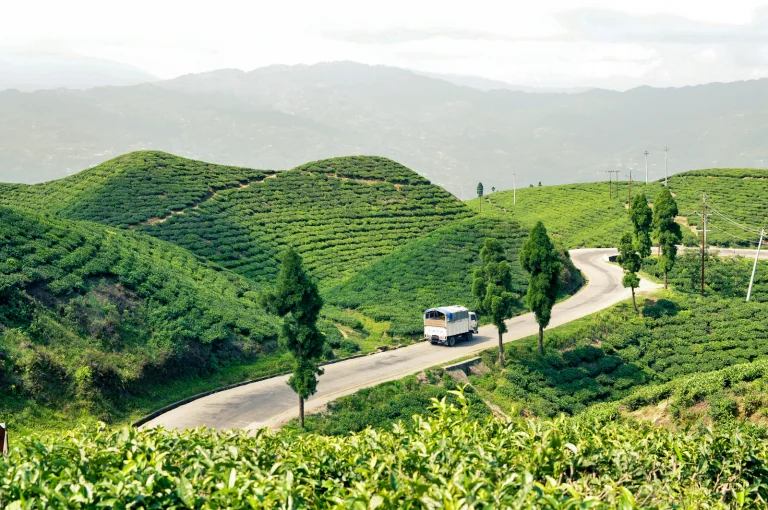
The Karnali Highway is a single-lane mountain road that was blacktopped with a thin Otta Seal surface around 2019–20, and about 80% of that seal has since peeled away, according to the Kathmandu Post (9 July 2026). Expect long sections of broken tarmac, gravel and rock, sharp bends with few signs, and places too narrow for two vehicles to pass.
It is also the most dangerous road in Karnali Province. The same report says the highway accounts for nearly 56% of road accidents in the province, with 917 deaths since 2014-15. The worst stretch is Dahikhola (Dailekh) to Galjebazaar (Kalikot), where the river drops away beside the road. Police have banned night-time driving on the highway, so plan every day to finish in daylight.
Repairs are slow. In June 2026 the Jumla road office terminated 16 long-delayed contracts on the highway and its feeder roads, including Nagma–Jumla maintenance and the Talcha–Rara road (Kathmandu Post, 29 June 2026). The engineer quoted by the Post said the 232 km from Jumla to Surkhet should take about six hours; in practice travellers often spend far longer.
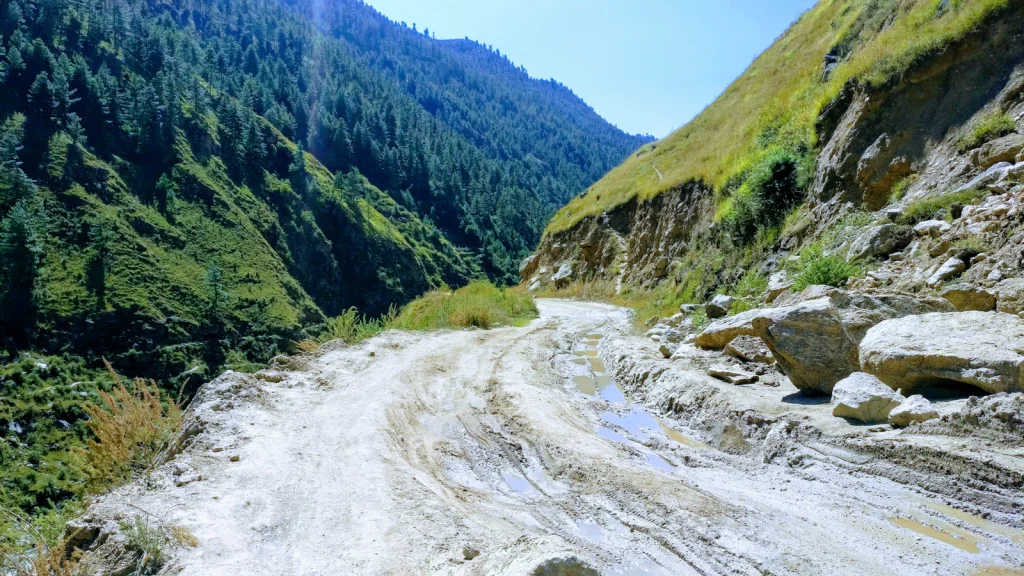
For a rider this means: stand on the pegs over the broken sections, give way early to buses and trucks, and keep your speed low enough to stop inside the distance you can see. The final roads past Nagma are rougher again.
The last stretch: Nagma, Talcha and the park gate
The last stretch to Rara leaves the Karnali Highway at Nagma, on the Jumla–Kalikot border, and follows the Nagma–Gamgadhi road through the Sinja valley and Bulbule to Talcha airport and Salleri, where the park entrance is. Past Nagma the road is gravel and dirt, with stream crossings, steep climbs and mud after rain.
Talcha sits at about 2,700 m and has an airstrip, a few lodges and the army post. Gamgadhi, the Mugu district headquarters, is further on and has more hotels. Upgrading has been promised for years: in February 2026 the Karnali government approved blacktopping about 3 km of the roughly 9 km Talcha–Gamgadhi section, at a cost of Rs 159.9 million over three years (Meroauto, Feb 2026). In August 2025 the Kathmandu Post reported that the Nagma–Gamgadhi contract had been awarded but blacktopping had not started. Do not expect a sealed road to Rara on your trip.
The Ratopati riders reached Salleri in October 2026 after a day of climbs, descents and mud between Bulbule and Salleri. That brings us to how the roads look right now.
Thinking about Rara?
We do not run a fixed Rara tour. Tell us your dates and riding experience; we put you in touch with a government-registered Nepali operator and send you a day-by-day plan and an itemised cost estimate, or tell you plainly if the route cannot be run on your dates.
Rara road status now (18 November 2026)
As of 18 November 2026 there is no official report of the Karnali Highway or the Nagma–Gamgadhi road being closed, but both have been blocked several times this autumn and can close again with little warning. Check the day before you ride each section.
- Early September 2026: landslides at Gagane Khola, S Mode and Ratobhir in Kalikot closed the highway from 5 September; it reopened at 2:45 pm on 8 September (The Rising Nepal).
- 9 September 2026: a dry landslide at Bhamlu Khola in Dullu, Dailekh, blocked the Surkhet–Jumla section again the night after it reopened (Khabarhub).
- 31 October 2026: the highway was completely blocked at Aulise in Barahatal, Surkhet, by a dry landslide, and the Nagma–Gamgadhi road was blocked at Talcha by bad weather (Khabarhub).
Dry landslides, which fall without rain, are a feature of this road in autumn, so a clear forecast is not a guarantee. A local operator can check with drivers and the local road office before each day. Our guide to Nepal routes after the 2026 floods covers the wider network. Once the road is open, fuel is the next thing to plan.
Fuel, repairs and supplies on the way to Rara
Fuel on the Rara route is the main planning problem: the last official petrol pump is at Sai Khola near Rakam Karnali, and beyond that you rely on bottled fuel sold in Jumla and Salleri, which is scarce and sometimes mixed with kerosene. The Ratopati riders advise filling up at Sai Khola even if the tank is not empty.
- Fuel: carry enough range for the round trip from Sai Khola to Rara and back, plus a margin. A 2016 group used about 65 litres per bike over the whole Kathmandu–Rara loop.
- Repairs: there are no proper garages after Jumla, so the bike needs fresh brake pads, good tyres and a recent service before you leave Surkhet.
- Brakes: on the long descent past Manma the Ratopati riders had brake fade from overheating; use first gear and engine braking on long downhills.
- Kit: tubes, a pump, tyre levers, a chain link and basic tools. Our dirt bike tour page gives a feel for the riding surfaces.
- Licence: you need a valid licence and an International Driving Permit; see our licence and IDP guide.
With fuel and spares sorted, timing is what decides whether the road is dusty, muddy or icy.
Best time to ride to Rara Lake
The best time to ride to Rara Lake is October to November, followed by March to April, when the roads are drier and the skies clearest; the Nepal Tourism Board and park visitor reports give the same windows. Avoid the June–August monsoon, when the Karnali Highway is at its worst for landslides and mud.
| Months | Riding conditions |
|---|---|
| October–November | Best window: dry roads, clear views; cold nights and the risk of early snow by late November |
| December–February | Very cold at 3,000 m; ice on the roads near the lake and snow on higher ground. A February 2016 ride was stopped short by thick ice |
| March–April | Good: rhododendrons in bloom, roads dusty rather than muddy |
| May | Warm; roads usually open, but pre-monsoon storms start |
| June–August | Monsoon: landslides, mud and frequent closures. Not recommended |
| September | Late-monsoon slides are common, as in 2026; ride only in the last week if at all |
Our month-by-month guide to riding in Nepal compares Rara with the other routes. Once you are there, a few costs and practicalities apply.
Fees, rooms and phone signal at Rara
Rara National Park charges NPR 3,000 per person per entry for foreign visitors, NPR 1,500 for SAARC nationals and NPR 100 for Nepali citizens, with boating at NPR 500 per person (The Rising Nepal, Sept 2026). Confirm the fee and any other paperwork with your operator before you go, since fees in Nepal change.
Rooms are basic and limited. In 2025 the Kathmandu Post reported only a few larger hotels near the lake, homestays close to shutting for lack of guests, and visitors sometimes sleeping in tents; many people stay in Talcha, Gamgadhi or Jumla instead. The same report described very limited phone network, little or no internet and unreliable electricity. The park’s own office advises bringing a full first-aid kit because there is no health post (DNPWC).
Tell someone your plan before you leave Surkhet, carry cash for the whole trip, and expect to be out of contact for a day or two. All of which raises the real question.
Is the ride to Rara worth it?
The ride to Rara is worth it if you have 10 or more days, solid off-road experience and want a part of Nepal almost no foreign riders see; it is not worth it as a first Nepal ride or on a short trip. The lake is beautiful, but most of your time goes on hard road, not at the water.
| Option | Time from Kathmandu | Good for | Drawbacks |
|---|---|---|---|
| Ride both ways | 8–10 days | Experienced riders who want the whole of the far west | Very long days on the Karnali Highway; landslide risk; few services |
| Fly in | About 3 hours in good weather (Kathmandu–Nepalgunj–Talcha) | Seeing the lake without the road | No riding; Talcha flights are irregular and weather-dependent |
| Upper Mustang instead | 10–13 days | A remote, high ride with better lodges | Restricted-area permit and guide required |
If you want remote, high and empty but a little more forgiving, Upper Mustang by motorbike is the obvious comparison. For a long ride to a quiet corner of Nepal on mostly paved roads, Ilam and eastern Nepal by motorbike is the gentler alternative. If Rara is the goal, plan it as an expedition rather than a tour. Read our guide to riding safely in Nepal first, and ride with a support vehicle or at least a second bike.
Motorbike Tour Nepal does not have a fixed Rara itinerary. If you send us your dates, we put you in touch with a government-registered Nepali operator and come back with a plan and cost estimate, or tell you honestly that the dates or road status do not work.
Frequently asked questions
Can you ride a motorbike to Rara Lake?
You can ride to the edge of Rara National Park near Talcha and Salleri, but not to the lakeshore. Bikes are parked at the park boundary and the last stretch is a walk of about 40 minutes; vehicles need permission to enter the park.
How long does it take to ride from Kathmandu to Rara Lake?
Usually three to four days each way, so most riders allow eight to ten days for the return trip including a day at the lake and a spare day for landslides. The ride is roughly 2,000–2,150 km in total.
Is the road to Rara Lake paved?
Only partly. The Karnali Highway from Surkhet was given a thin seal, but about 80% of it had peeled away by mid-2026. Beyond Nagma the road to Talcha is gravel and dirt.
What is the best time to ride to Rara Lake?
October to November is best, then March to April. Avoid the June to August monsoon, and expect ice near the lake from December to February.
How much is the Rara National Park entry fee?
NPR 3,000 per person per entry for foreign visitors and NPR 1,500 for SAARC nationals, as reported in September 2026. Confirm the current fee before you go.
Where can you get fuel on the way to Rara?
The last official petrol pump is at Sai Khola near Rakam Karnali. After that, fuel is sold in bottles in Jumla and Salleri, is scarce and may be mixed with kerosene, so fill up at Sai Khola.
Is Rara Lake suitable for a first motorbike tour in Nepal?
No. The Karnali Highway is the most dangerous road in Karnali Province and services are few. Try an easier route such as Kathmandu to Pokhara first.
Plan a ride to the far west
Motorbike Tour Nepal is run by Govind Rai, who is from Nepal. Tell us your dates and riding experience; we put you in touch with a government-registered Nepali operator and send you a day-by-day plan and an itemised cost estimate.
Sources
- Kathmandu Post: Karnali Highway remains province’s deadliest road (9 Jul 2026)
- Kathmandu Post: 16 Karnali Highway contracts terminated (29 Jun 2026)
- Kathmandu Post: Rara draws tourists but poor amenities keep them from staying (3 Aug 2025)
- Kathmandu Post: Tourists suffer as budgets for Rara sit idle (5 Jan 2025)
- Kathmandu Post: Infrastructure near Rara Lake to be relocated (25 Feb 2023)
- The Rising Nepal: Rara visitor numbers and fees, FY 2025/26 (Sept 2026)
- The Rising Nepal: Karnali Highway reopens after three days (9 Sept 2026)
- Khabarhub: Dry landslide blocks Karnali Highway (9 Sept 2026)
- Khabarhub: More than 12 road sections blocked (31 Oct 2026)
- Ratopati: Motorcyclists embark on challenging journey to Rara Lake (31 Oct 2026)
- Meroauto: Mugu to get first black-topped road (24 Feb 2026)
- Nepal Tourism Board: Rara National Park
- Department of National Parks and Wildlife Conservation: Rara National Park
- Buddha Air: Rara calling (access and walking times, May 2018)
- DamnPilot: Ride to Rara Lake, Mugu on a motorbike (2016 trip log)
- Wikipedia: Rara Lake
- Wikipedia: Rara National Park
Last checked 18 November 2026.