How Hard Is a Motorbike Tour in Nepal? Every Route Rated
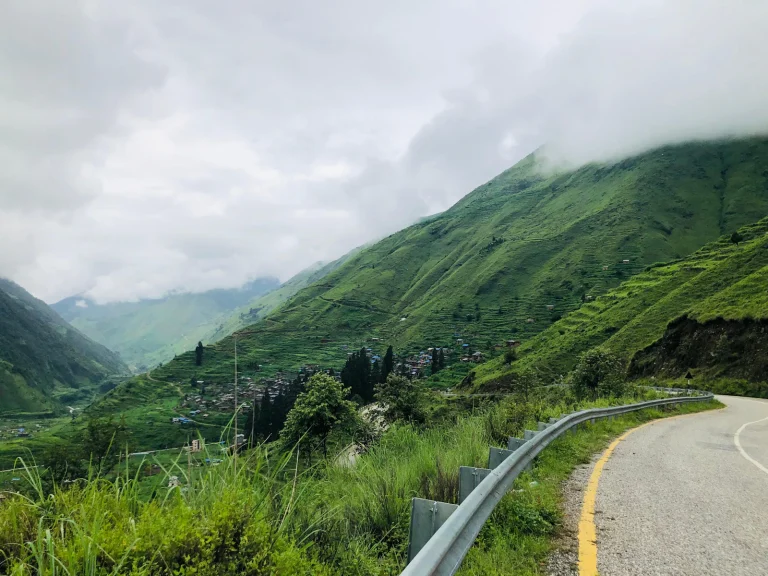
A motorbike tour in Nepal can be anything from a paved, easy-going loop that suits a first trip abroad to several days of loose gravel, riverbeds and thin air at 3,800 m. So the honest answer to “how hard is it?” is that it depends almost entirely on the route you pick and the time of year you ride.
The difficulty comes from four things: the road surface, the traffic, the altitude and the length of the riding day. You do not need to be an enduro racer for most of these trips. You do need to be honest about which of those four you can handle, because a road that is manageable for a confident off-road rider can turn into a long, frightening day for someone who has only ever ridden on tarmac.
In this guide
- Nepal motorbike routes rated by difficulty
- What actually makes a route hard
- On-road vs off-road riding in Nepal
- Are you ready? A self-check
- Skills to practise before you come
- Fitness and long riding days
- How the season changes the difficulty
- How your choice of bike changes it
- Which route should you choose?
- Frequently asked questions
Nepal motorbike routes rated by difficulty
These ratings match the difficulty levels on our tour pages. Treat them as a guide for normal dry-season conditions.
| Route | Rating | Riding surface | Highest overnight | Suits |
|---|---|---|---|---|
| Kathmandu day rides | Easy–moderate | Paved and broken roads | About 1,400 m | Anyone with a full licence and some experience |
| Kathmandu to Pokhara | Easy–moderate | Paved, with heavy traffic | Low hills | Licensed riders used to traffic |
| Nepal Highlights | Easy–moderate | Mostly paved highways and hill roads | No altitude concerns | First trips, couples, winter riding |
| Lower Mustang and Muktinath | Moderate | Tarmac, broken asphalt, gravel, some water crossings | Around 3,700 m | A first Himalayan ride, if you can stand on the pegs for short stretches |
| Pokhara to Muktinath | Moderate | Several hours of gravel and rock | High, with a short stay | Riders who have handled a 400cc+ bike on rough ground |
| Annapurna Circuit to Manang | Moderate–challenging | Rock steps, loose surfaces, water crossings, exposed sections | 3,540 m | Confident riders happy to stand on rough ground |
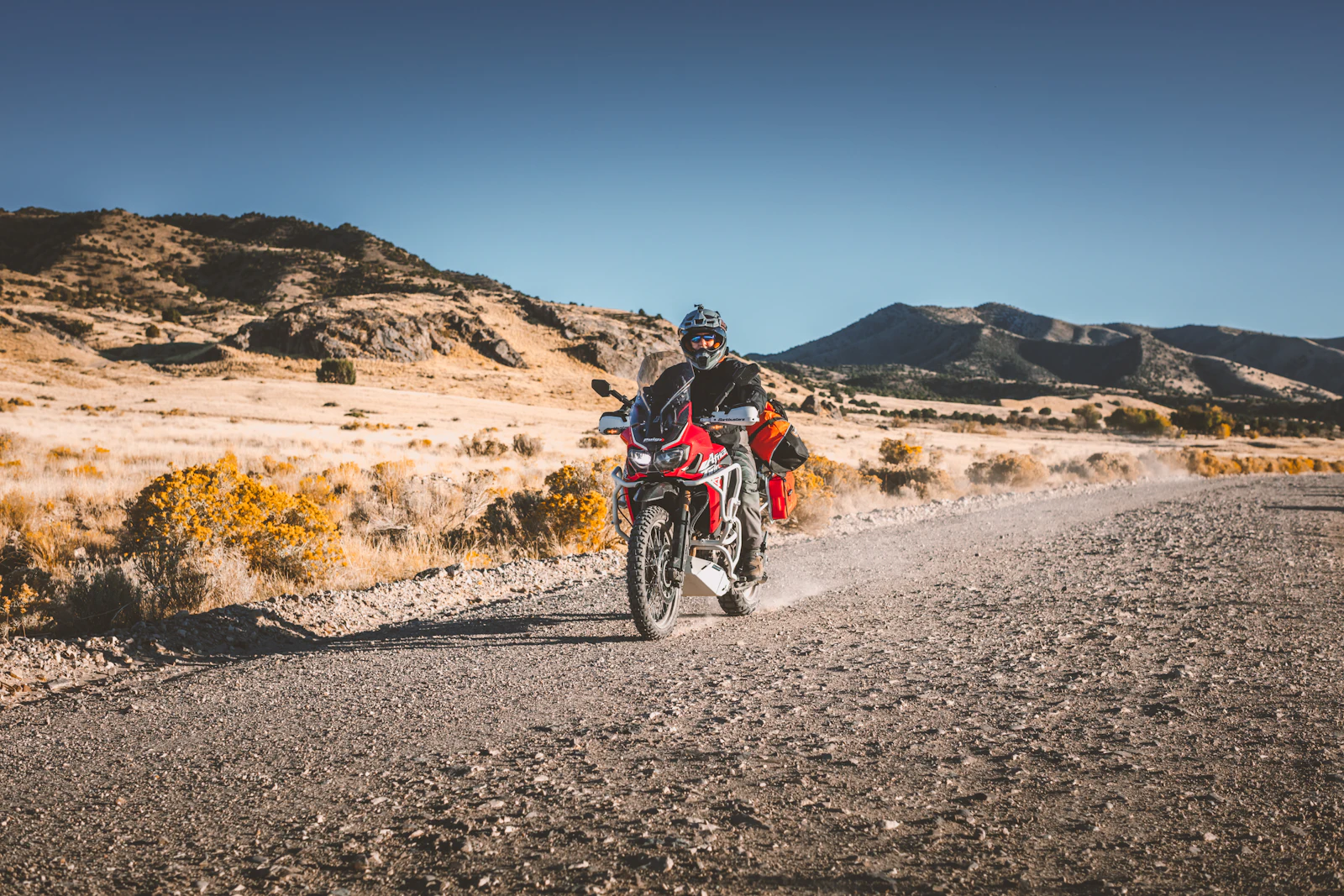
| Upper Mustang | Challenging | Loose gravel, rocky riverbeds, sand, short steep climbs | About 3,800 m | Experienced riders with real off-road practice |
| Dirt bike tour | Challenging | Rocky climbs and descents, shallow river crossings | Varies by route | Solid off-road riders |
Further west, the long ride to Rara Lake by motorbike is harder than any route in this table: eight to ten days on the Karnali Highway and rough roads past Nagma, with few fuel stops or garages.
What actually makes a route hard
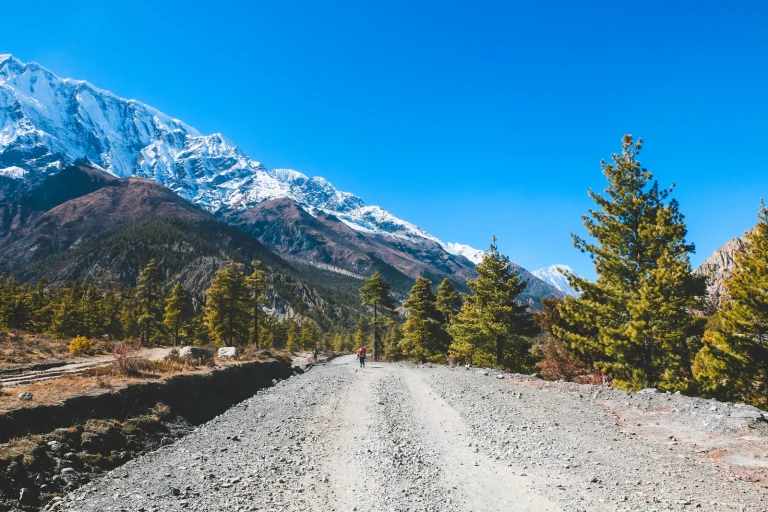
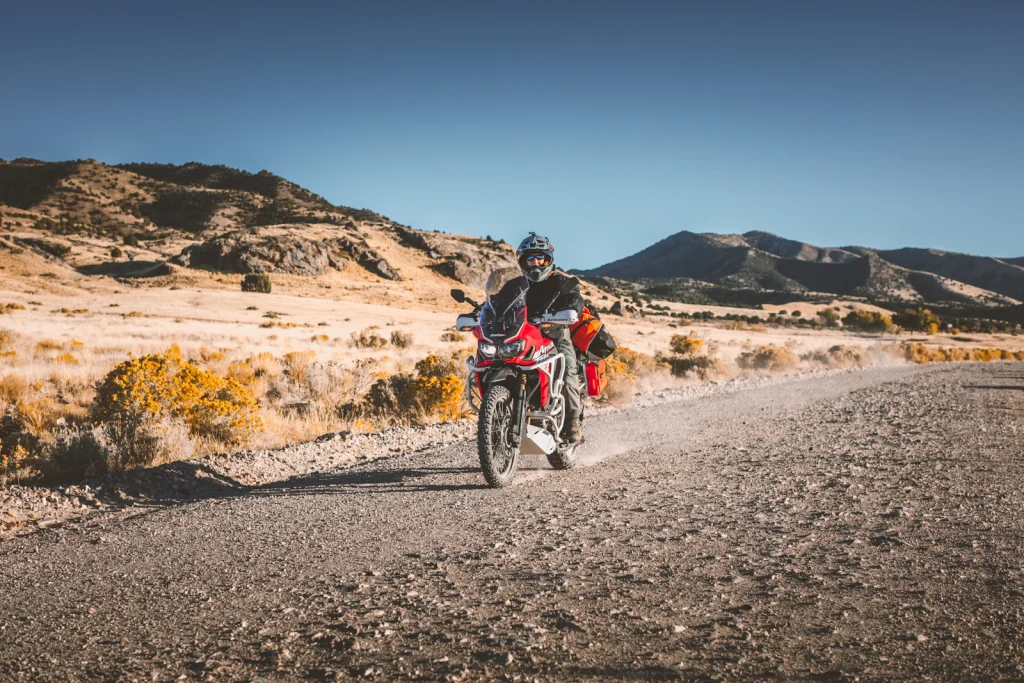
Road surface. This is usually the biggest factor. The upper sections of Mustang and Manang mix gravel, sand, riverbed and rock. On the Upper Mustang road, rider reports describe loose gravel and sand between Kagbeni and Charang, unstable approaches to river crossings, rocky switchbacks and exposed cliff-side riding towards Lo Manthang. On the Manang side, the stretch from Besisahar to Chame is narrower and rougher than the Jomsom road, with rock steps and water crossings.
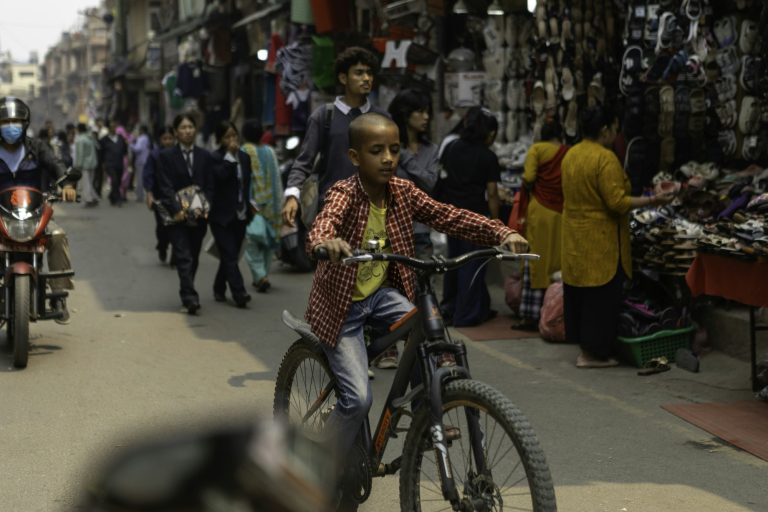
Traffic. Tarmac does not automatically mean easy. The Prithvi Highway between Kathmandu and Pokhara is fully paved, but it is Nepal’s busiest road, and buses and trucks overtake on blind bends. Many riders find this more stressful than an empty gravel track. Read our guide to riding safely in Nepal before deciding.
Altitude. Your body and your bike both feel it. Above about 2,500 m you may notice breathlessness, poor sleep and slower reactions, all of which make technical riding harder late in the day. On a motorbike you can climb much faster than a trekker, which raises the risk of altitude sickness. Our altitude guide explains how to plan around it.
Day length. Distances look short on paper, but 65 km can take five to six hours on the road from Besisahar to Chame. Long days on rough roads wear you down, and tired riders make more mistakes.
On-road vs off-road riding in Nepal
“Off-road” in Nepal rarely means riding across open country. It usually means a public road that happens to be unpaved, shared with jeeps, buses, goats and construction crews. That gives you a different set of problems from a trail ride at home.
| On-road (paved routes) | Off-road (unpaved routes) | |
|---|---|---|
| Main hazard | Other traffic, potholes, blind overtakes | Loose surfaces, water, drop-offs, landslide debris |
| Riding position | Mostly seated | Standing often, weight on the pegs |
| Typical speed | Often 30–60 km/h | Often walking pace to 30 km/h |
| Skills that matter | Reading traffic, defensive riding, hairpins | Throttle and clutch control, balance at low speed, line choice |
| Tiredness comes from | Constant concentration | Physical effort, plus concentration |
| Best bike | Classic 350 or Himalayan | Himalayan 411 or 450, CRF250L |
| Example routes | Nepal Highlights, Kathmandu to Pokhara | Upper Mustang, Manang, Dirt bike tour |
The typical speeds above are a rough guide, not a target. Most routes mix both types of riding, too. Even Lower Mustang, where most of the road is now paved or concrete, still has rough rock and gravel through the gorge between Tatopani and Ghasa, and loose riverbed near Jomsom.
Not sure which route fits your riding?
Tell us what you ride now and what terrain you have ridden. We will suggest a route that fits and send a day-by-day plan.
Are you ready? A self-check
Answer these honestly. They are our own rule of thumb, not a formal test, and the point is to choose a route you will enjoy.
For paved routes, you should be able to:
- Ride confidently in busy traffic on the left-hand side of the road.
- Hold a line through tight uphill and downhill hairpins.
- Stop smoothly on a slope and pull away again.
- Spend about five hours a day in the saddle, several days in a row.
For moderate routes such as Lower Mustang and Pokhara to Muktinath, add:
- Standing on the pegs over rough ground for short stretches.
- Riding gravel and broken road for several hours without tensing up.
- Crossing shallow water at a steady pace.
- Handling a 400cc+ bike at low speed.
For challenging routes such as Manang and Upper Mustang, add:
- Riding standing up for long periods, including on loose gravel and rocky riverbeds.
- Keeping your momentum through sand instead of braking and sinking.
- Climbing and descending short, steep, loose sections, sometimes with a drop on one side.
- Picking up a dropped bike, which at altitude takes far more effort than at home.
If you answered “no” to several in a group, step down one level or book some off-road training first. Upper Mustang is not the place to learn. As one rider’s account on Mad or Nomad puts it, the ride is “not like doing a hard enduro”, but it recommends a training day if your off-road experience is limited.
Skills to practise before you come
A weekend or two of practice will do more for your trip than any new gear. If you can, book a day at an off-road riding school in your home country, ideally on a bike similar in size to the one you will ride in Nepal.
- Standing on the pegs. Grip the tank with your knees, keep your arms loose and look well ahead. Practise until it feels normal, not like a special manoeuvre.
- Slow-speed control. Practise tight turns at walking pace, using the clutch, rear brake and throttle together.
- Loose surfaces. Find a legal gravel road or training venue. Stay relaxed, avoid sudden inputs and use mostly rear brake on loose descents.
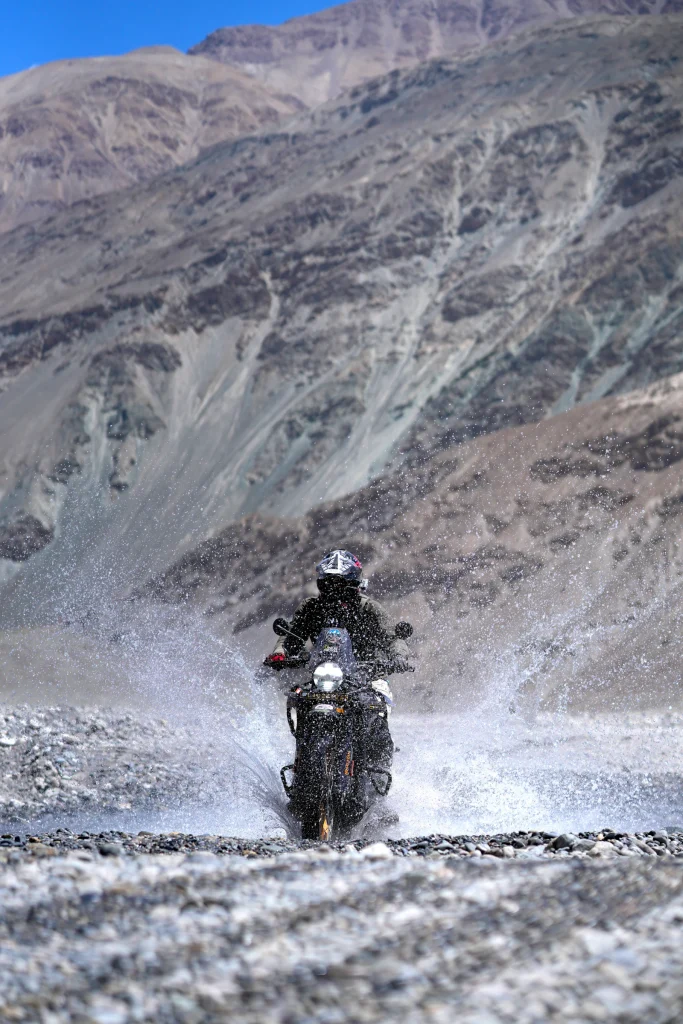
- Water crossings. Learn to look at the exit, keep a low gear and hold a steady throttle. In Nepal, check depth and current first, and walk it if you are unsure.
- Steep descents. Practise using engine braking in a low gear, with light, steady braking.
- Lifting a dropped bike. Practise the back-to-the-seat lift on a soft surface. You will almost certainly drop a bike at some point on a hard route, and most riders do.
Fitness and long riding days
You do not need to be an athlete, but rough roads are physically harder than most riders expect, especially at altitude. Leg strength helps with standing, core strength keeps your weight off your wrists, and general cardio helps you recover overnight. Start walking, cycling or gym work a couple of months before you leave, and include some long days in the saddle.
On the trip itself, drink regularly, take breaks before you feel you need them and stop early if you start making small mistakes. Sore hands, a stiff neck and a tired back are normal on long days, but numbness or pain that keeps getting worse is a reason to adjust your position or see a doctor. If you have a heart, lung or joint condition, get medical advice before booking a high-altitude or off-road route.
How the season changes the difficulty
| Season | What changes |
|---|---|
| March–May | Generally good. Lingering snow and snowmelt mud are possible high up, especially early in spring |
| June–September | Much harder. Landslides, washouts and flooded crossings can make a moderate route challenging, or close it completely |
| October–November | Usually the best conditions. Early snow is still possible: Cyclone Arnab brought two to three feet of snow to the Korala area at the end of October 2026 |
| December–February | Low-altitude routes remain good, but cold, snow and closed lodges make the high routes much tougher |
After a big monsoon, even an “easy” road can have temporary bridges and rough repairs. Our route update after the 2026 floods shows how much this can change from one year to the next.
How your choice of bike changes it
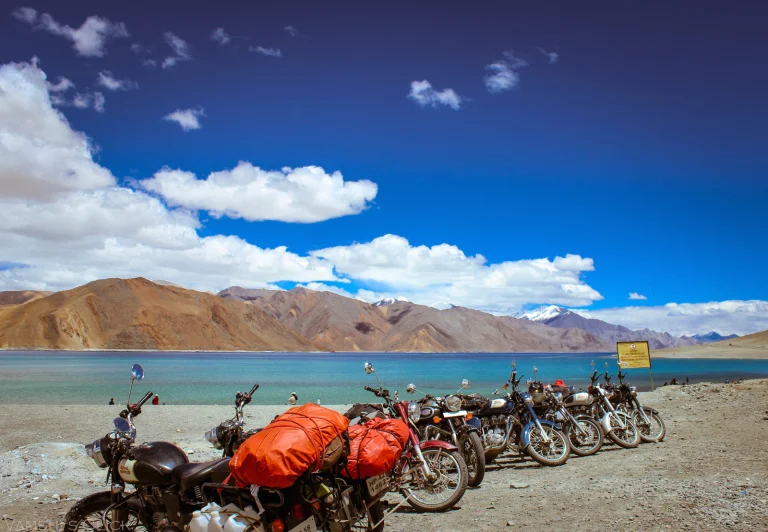
The right bike can move a route down a difficulty level, and the wrong one can do the opposite. Height matters as much as power, because on rough ground you need to be able to get a foot down.
- Honda CRF250L. Light and nimble, which makes it a good choice for shorter riders and rough tracks. It is much easier to lift, too.
- Royal Enfield Himalayan 411. Proven, simple and easy to fix in remote villages. It is heavier than a CRF, but steady on broken roads.
- Royal Enfield Himalayan 450. More power and better suspension, which helps at altitude and on longer rough days.
- Royal Enfield Classic 350. Comfortable on tarmac and for riding two-up, but not the right tool for Upper Mustang.
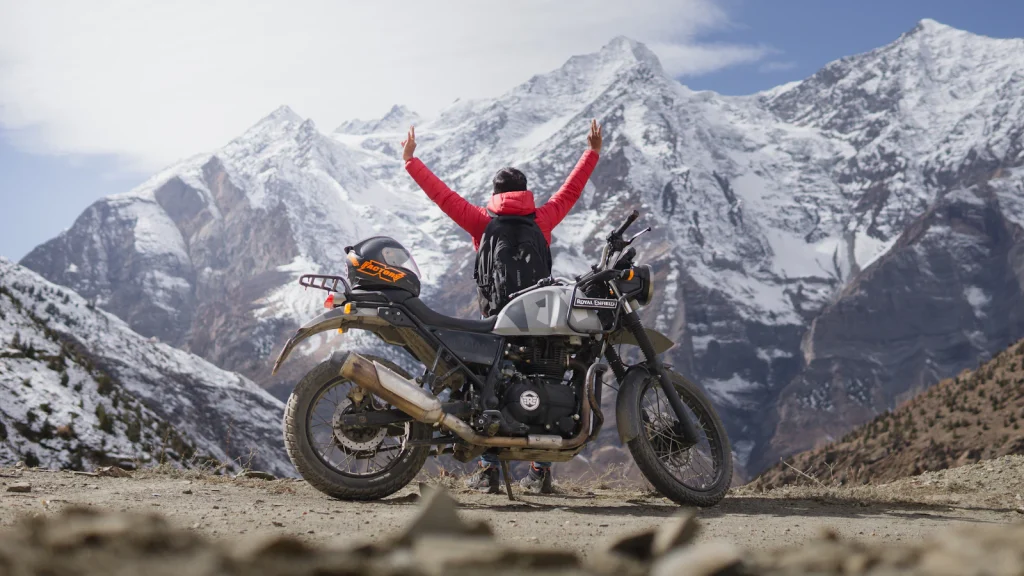
Whichever you pick, get used to it on an easier day before tackling the hard sections. See our Royal Enfield Himalayan tours page for more on the two Himalayan models.
Which route should you choose?
- Never ridden abroad, or tarmac only: start with Nepal Highlights or Kathmandu to Pokhara.
- Experienced on the road, with some gravel: Lower Mustang and Muktinath is the natural first Himalayan ride.
- Comfortable off-road, want something harder: Manang or Upper Mustang.
- Short on time: Pokhara to Muktinath gives you a real taste of the mountains.
- Riding with a pillion: stick to the paved routes. Rough roads are much harder two-up.
If you are between two levels, pick the easier one. You will ride better, enjoy the views more and still have a reason to come back. For costs, licences and insurance, see the planning guide and tour prices.
Frequently asked questions
Can a beginner do a motorbike tour in Nepal?
A newly licensed rider should build experience at home first. Once you are comfortable in traffic and have some touring behind you, paved routes such as Nepal Highlights are a realistic first trip. Mustang and Manang are not beginner routes.
Do I need off-road experience for Nepal?
Not for the paved routes. For Lower Mustang and Muktinath you need some gravel experience, and for Manang and Upper Mustang you need real off-road practice.
How hard is the Upper Mustang motorbike ride?
It is the hardest of our main tours, with loose gravel, rocky riverbeds, sand and steep climbs, and overnight stays at about 3,800 m. The pace can be steady, but this is not the place to learn off-road riding.
Is the Kathmandu to Pokhara ride difficult?
Technically no, as it is all paved. The challenge is the traffic, with trucks and buses overtaking on blind bends. Ride during the day and leave early.
What is the easiest motorbike route in Nepal?
Kathmandu valley day rides and the Nepal Highlights loop are the easiest, with mostly paved roads and no altitude concerns.
Is a Royal Enfield Himalayan too heavy for Nepal?
Many riders use one happily, but it is a heavy bike to lift at altitude. If you are shorter or expect a lot of tight, rough riding, consider a Honda CRF250L.
How many hours a day will I ride?
Plan on about five to seven hours on most routes, depending on the road. Short distances can still take most of a day on rough sections.
Find the right ride for your experience
Send us your dates and what you have ridden so far. We will reply with a route suggestion, a day-by-day plan and an itemised quote.
Sources
- Mad or Nomad: how to motorcycle to Lo Manthang (rider guide)
- Mad or Nomad: how to motorcycle to Lo Manthang
- Khabarhub: heavy snowfall and rain in Mustang (31 Oct 2026)
- Nepal Tourism Board: safety in the mountains
Last checked 3 November 2026.