Best Time to Visit Mustang, Nepal (Including Winter and Monsoon)
Mustang does not follow Nepal’s usual seasons. It sits in the rain shadow behind Dhaulagiri and the Annapurnas, so it stays dry while Pokhara and Kathmandu are drenched by the monsoon — but its winters are long, bitterly cold and windy, and the road and flights that get you there have seasons of their own.
This guide uses official climate data for Jomsom, recent road and flight records and festival calendars to explain what Mustang is really like in every month, for riders, trekkers and jeep travellers alike — and which month is best for what you want to do.
| The short answer | |
|---|---|
| Best overall | Late September to mid-November; April and May |
| Best for clear mountain views | October and November |
| Best for Upper Mustang | April to October, including the dry monsoon months |
| Best for festivals | May (Tiji in Lo Manthang); August (Yartung horse festival) |
| Best for apples | Mid-September to October |
| Quietest | December to February (very cold; many Upper Mustang lodges closed) |
| Riskiest for the road | July to early October (landslides below Jomsom) |
In this guide
- Why Mustang’s seasons are different
- Mustang weather by month: the data
- Spring: March to May
- Monsoon: June to August
- Autumn: September to November
- Winter: December to February
- Festival calendar
- Best time by type of trip
- Riding Mustang in each season: tips for motorcyclists
- What to pack, by season
- Mustang month by month
- Mustang through the seasons
- FAQs
Why Mustang’s seasons are different
Moist monsoon air from the Bay of Bengal hits the southern wall of the Himalaya and drops most of its rain there: Pokhara gets more than 3,000 mm a year. By the time the clouds have squeezed through the Kali Gandaki gorge, there is little left. Jomsom’s official average is about 292 mm a year — less than a tenth of Pokhara’s — and Upper Mustang is drier still, with a cold, semi-arid climate.
Three other factors shape the seasons: altitude (Jomsom is about 2,720 m and Lo Manthang about 3,800 m, so it is cold for much of the year), wind (a strong valley wind blows from late morning every day, strongest in spring) and access (the road from Beni and the Jomsom flights are both affected by weather lower down).
Mustang weather by month: the data
| Month | Jomsom max | Jomsom min | Rain (mm) | Lo Manthang (approx.) |
|---|---|---|---|---|
| January | 10°C | −2°C | 14 | Day ~4°C, nights to −15°C or lower |
| February | 12°C | −1°C | 21 | Very cold; snow possible |
| March | 15°C | 2°C | 30 | Cold nights; warming days |
| April | 19°C | 4°C | 21 | Mild days, frosty nights |
| May | 21°C | 8°C | 19 | Pleasant; windy |
| June | 23°C | 12°C | 32 | Warm days, cool nights |
| July | 23°C | 14°C | 47 | Warmest; occasional showers |
| August | 23°C | 14°C | 44 | Warm; green fields |
| September | 21°C | 12°C | 36 | Clear and mild |
| October | 18°C | 6°C | 18 | Crisp; nights below freezing |
| November | 15°C | 2°C | 5 | Cold; very clear |
| December | 12°C | −1°C | 5 | Freezing nights; lodges closing |
Jomsom figures are 1991–2020 normals from Nepal’s Department of Hydrology and Meteorology. There is no long-term official record for Lo Manthang; at about 1,100 m higher it is typically around 6°C colder than Jomsom, and temperatures of −15°C were recorded there in early December 2025.
Spring: March to May
March is cold at night but sunny, with very few visitors; Lower Mustang is in good shape and Upper Mustang lodges start reopening late in the month. April is a superb month: warmer days, apricot and apple blossom in Marpha and Tukuche, and roads at their best before the monsoon. May is warmer still and brings the Tiji festival to Lo Manthang.
The downsides: the afternoon wind is at its strongest in spring, and haze from lower Nepal can soften views of the big peaks by May. For riders it is one of the best seasons — the Beni–Jomsom road is dry and stable.
Monsoon: June to August
This is where Mustang differs most from the rest of Nepal. Jomsom averages only 32–47 mm of rain a month in June, July and August, and Upper Mustang is drier still. The trails and the road to Lo Manthang are dry and quiet, the barley fields are green, and the Yartung horse festival is held in late summer.
The catch is getting there. South of Ghasa, the Kali Gandaki gorge lies outside the rain shadow, and the Beni–Jomsom road crosses steep, landslide-prone slopes. In August 2025 the road was blocked by landslides at several points, and in late September 2026 floods blocked it in more than 50 places, keeping it closed until 9 October. Jomsom flights are frequently cancelled in cloud and are often suspended for part of the monsoon.
Monsoon trips to Upper Mustang can be magical, but they need flexibility, spare days and an operator who watches the road closely.
Tell us your dates
We will suggest the best Mustang route for the season you can travel — and tell you honestly if the road is likely to be a problem.
Autumn: September to November
September is a transition month: the rain clears from Mustang early, but the road below Jomsom can still be hit by late-monsoon landslides. October is the classic month — stable weather, crystal-clear views of Dhaulagiri, Nilgiri and Annapurna, harvest time in the villages and the apple season in full swing. It is also the busiest month: in a typical year more foreign visitors enter Upper Mustang in the Nepali month of Ashwin (mid-September to mid-October) than in any other. November is quieter and colder, with superb visibility; by late November nights in Upper Mustang are well below freezing and lodges start to close.
After Dashain, the big Nepali festival in October, domestic tourism to Mustang surges, with Nepali bikers and jeep groups heading for Muktinath. In 2026 Dashain falls on 11–21 October and Tihar on 8–10 November.
Winter: December to February
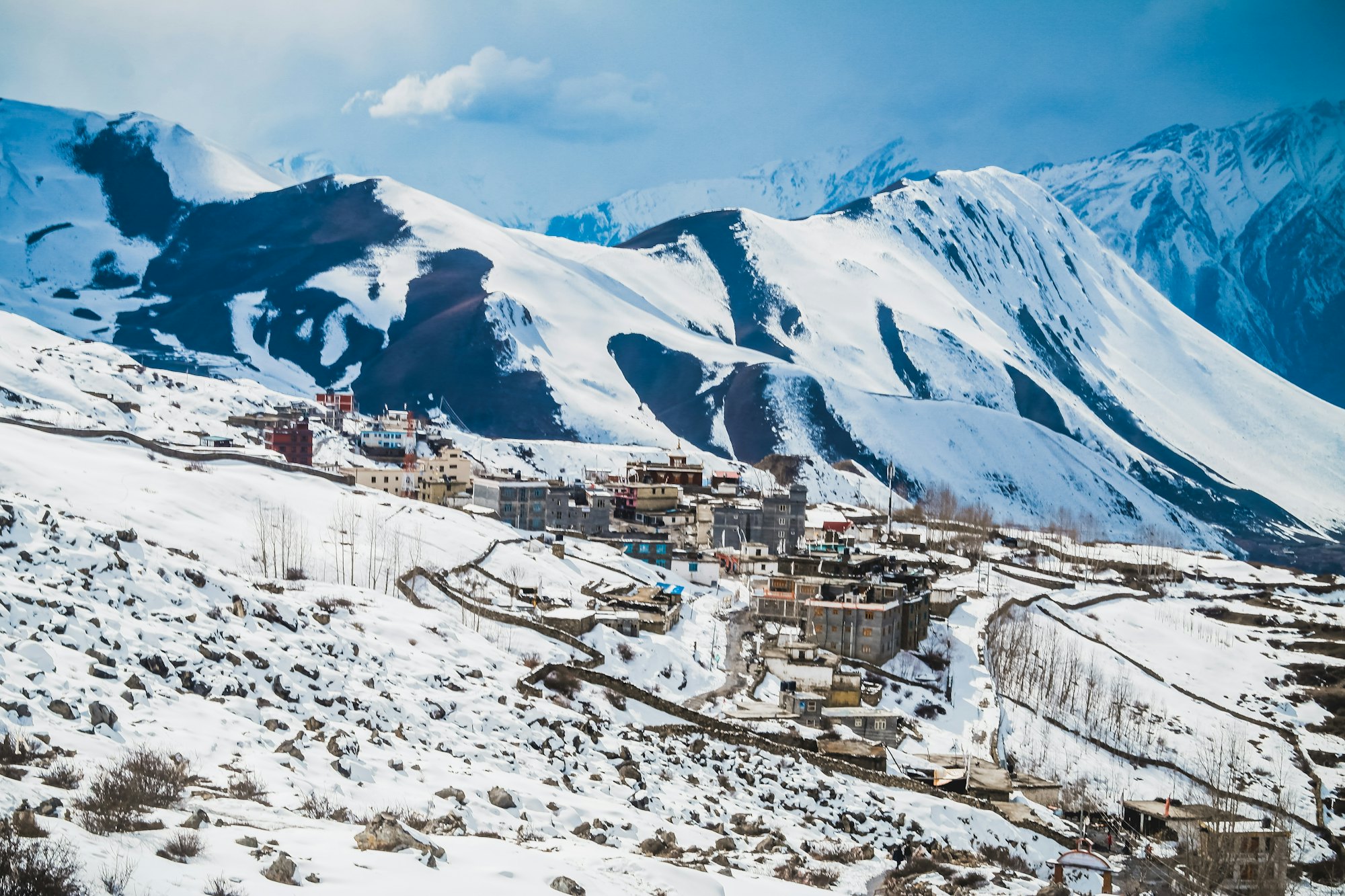
Winter in Mustang is cold, clear and empty. In the official records, January nights in Jomsom average about −2°C; in Lo Manthang −15°C has been recorded, and many families move south to Pokhara, Kathmandu or further afield until spring. Most Upper Mustang lodges close, and visitor numbers fall to almost nothing — in the coldest Nepali month (mid-January to mid-February) only a few dozen foreigners enter Upper Mustang.
Lower Mustang stays open. Jomsom, Marpha and Kagbeni have lodges operating, the sun is strong, skies are often perfectly blue and you will have the villages to yourself. Snow can close the road between Jomsom and Muktinath for a few days at a time, and Jomsom flights are often suspended in winter — over the 2025–26 winter they stopped for around three months.
We do not run Upper Mustang motorbike tours in mid-winter. Lower Mustang in December can be excellent for well-equipped riders.
Festival calendar
| Festival | Where | When |
|---|---|---|
| Tiji | Lo Manthang palace square | Three days, usually in May (Tibetan calendar); confirm each year |
| Yartung | Lo Manthang and the Muktinath villages | Late summer, usually August; horse races, archery |
| Apple harvest and picking festival | Marpha, Tukuche, Kagbeni | Mid-September to October |
| Dashain | Nationwide | October (11–21 Oct in 2026) |
| Tihar | Nationwide | October–November (8–10 Nov in 2026) |
| Losar (Tibetan New Year) | Upper Mustang | February–March, when many locals are away for winter |
Tiji dates are set by the Lo Manthang monastery each year. Lodges in Lo Manthang fill months ahead, so book early if you want to be there.
Best time by type of trip
- Motorbike tours: April–May and October–early November for the best roads and weather. See our Upper Mustang and Lower Mustang tours.
- Jeep tours: same as above; summer is possible for Upper Mustang if you allow spare days.
- Trekking in Upper Mustang: May to October; the monsoon months are good for the trek itself.
- Pilgrimage to Muktinath: March–June and September–November. Summer brings large crowds of Indian pilgrims. See our Muktinath temple guide.
- Photography: October and November for clarity; May for festivals; August for green fields in a desert.
- Avoiding crowds: March, late November and early December.
Riding Mustang in each season: tips for motorcyclists
- Spring: start early to avoid the strongest winds; carry a buff and goggles for the dust.
- Monsoon: expect mud, rockfall and river crossings in the gorge; allow two buffer days and never ride after heavy rain.
- Autumn: book bikes and lodges early for October; carry warm gloves for frosty mornings above Kagbeni.
- Winter: wait for the sun before riding; watch for black ice in shaded corners; heated grips or winter gloves are essential.
Whatever the season, read up on altitude sickness on a motorbike before heading above Kagbeni.
What to pack, by season
| Season | Essentials |
|---|---|
| Spring | Windproof jacket, sunglasses, buff, warm layers for nights, sunscreen |
| Monsoon | Waterproofs for the lower valley, quick-dry layers, sun protection for Upper Mustang |
| Autumn | Down jacket, thermal base layers, warm gloves, lip balm |
| Winter | Expedition-weight down jacket, thermal everything, warm sleeping bag, winter riding gloves |
Mustang month by month
January
The coldest month. Jomsom days reach about 10°C in the sun but nights drop below freezing; Upper Mustang is deep-frozen and largely emptied of residents. Lower Mustang is open, quiet and clear. Flights are often suspended. Good only for hardy travellers sticking to Jomsom, Marpha and Kagbeni.
February
Still very cold, with the best chance of snow at Muktinath and above. Tibetan New Year (Losar) sometimes falls in February, though many Lo Manthang families celebrate it in the south. Very few visitors.
March
Days warm noticeably and the valley comes back to life. Upper Mustang lodges begin reopening late in the month. Roads are dry; winds strengthen. One of the quietest good months.
April
Excellent. Blossom in the orchards, warm days around 18–19°C in Jomsom, frosty nights higher up and open roads all the way to Lo Manthang. Book in advance; this is a popular month with trekking groups.
May
Warm, long days and the Tiji festival in Lo Manthang (usually). The afternoon wind is at its fiercest and haze can reduce views from the gorge. Indian pilgrim numbers at Muktinath rise sharply in May and June.
June
The monsoon arrives in the south. Mustang stays dry, but the road through the gorge begins to suffer landslides and flights become unreliable. Upper Mustang itself is very pleasant.
July
The wettest month, though Jomsom still averages under 50 mm. Expect road closures below Ghasa; allow buffer days. Green barley fields make Upper Mustang beautiful.
August
Similar to July, with the Yartung horse festival in late summer. Apple harvesting begins at the end of the month in some villages. Road disruption is likely.
September
The rain clears early in Mustang, but late-monsoon landslides can still block the road below Jomsom, as happened in late September 2026. The apple-picking season starts in Marpha in the second half of the month.
October
Peak season: clear, stable weather, the best mountain views of the year, apple harvest and harvest festivals. After Dashain, Nepali domestic tourists flood in. Book bikes, jeeps and lodges early.
November
Crisp, cold and gloriously clear, with fewer visitors. By the end of the month, nights in Upper Mustang are well below freezing and lodges start to close. Great for Lower Mustang.
December
Winter sets in. Lower Mustang is quiet and sunny; Upper Mustang residents move south and most lodges close. Flights may be suspended from late December.
Mustang through the seasons
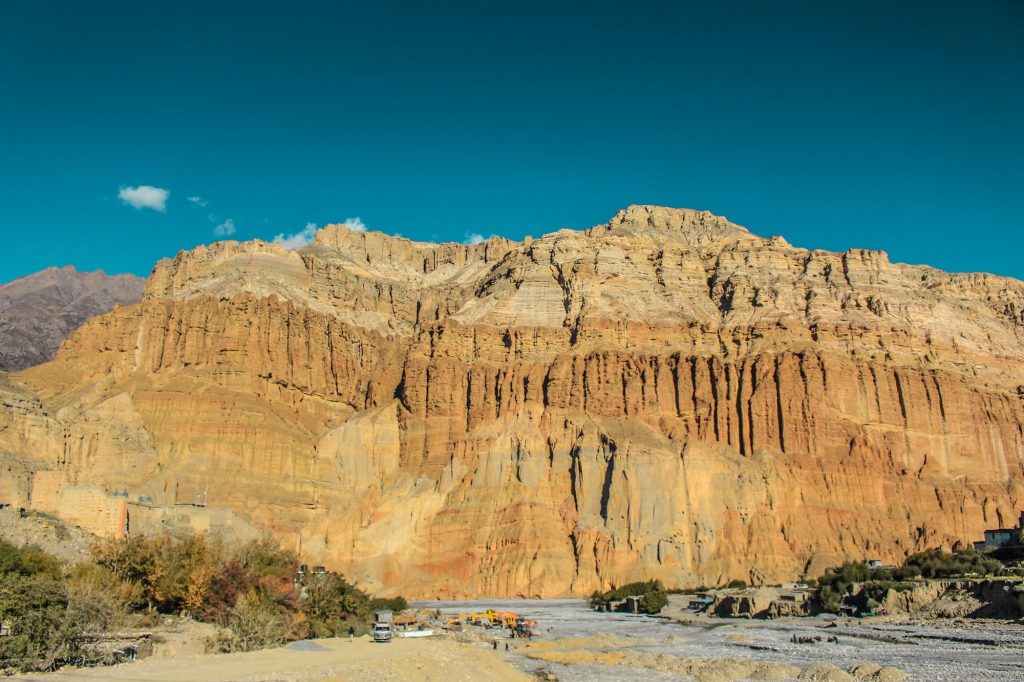
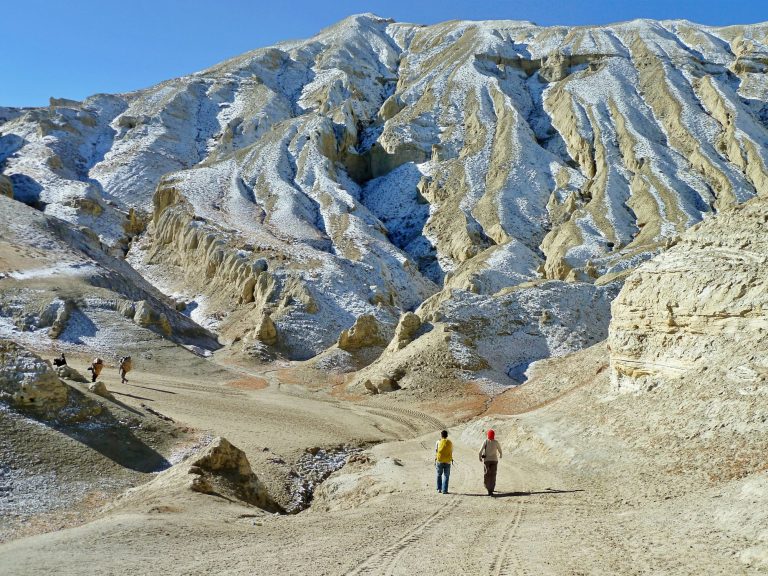
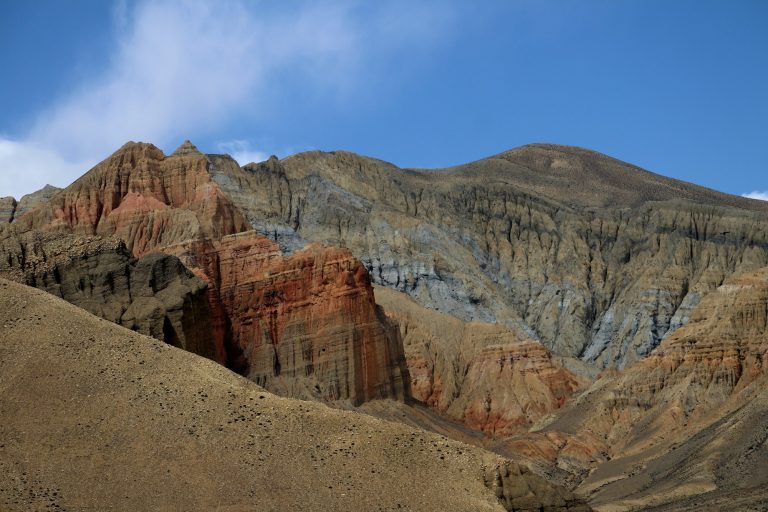
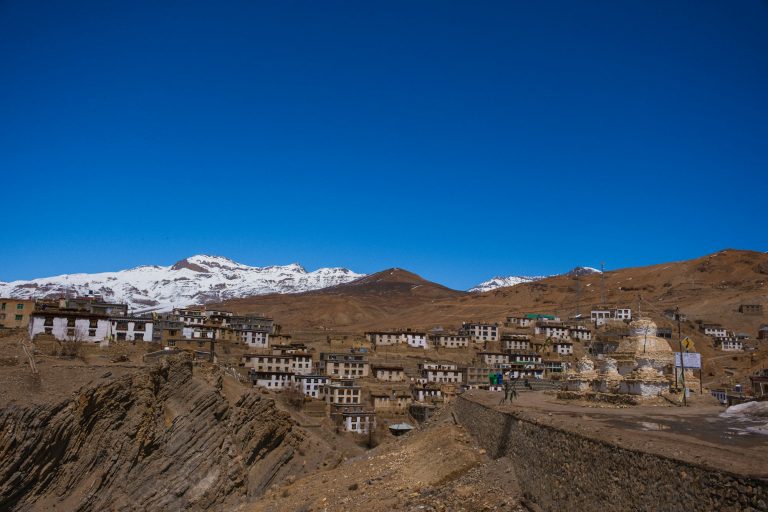
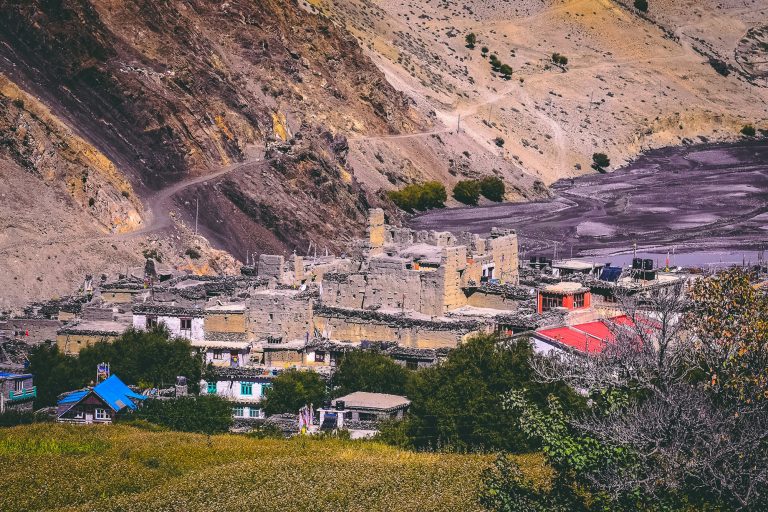
Autumn light is the clearest of the year; spring brings blossom to the orchards around Marpha and Tukuche; summer turns the barley fields of Upper Mustang green against the desert; and winter covers Muktinath and the passes in snow.
Frequently asked questions
What is the best month to visit Mustang?
October, for clear skies, stable weather and the apple harvest. April and May are also excellent, with the Tiji festival in May.
Can you visit Mustang during the monsoon?
Yes. Mustang lies in a rain shadow and stays mostly dry. The challenge is the road below Jomsom, which is prone to landslides, and unreliable flights.
Is Mustang open in winter?
Lower Mustang is open, though very cold. Upper Mustang is extremely cold and most lodges close from about December to February.
How cold is Upper Mustang in winter?
Nights in Lo Manthang regularly fall below −10°C, and −15°C was recorded in December 2025.
When is the Tiji festival?
Usually in May, over three days, according to the Tibetan lunar calendar; dates are confirmed each year.
When is Yartung?
In late summer, usually August, with horse racing in Lo Manthang and the Muktinath villages.
When is apple season in Mustang?
Mid-September to October, centred on Marpha, Tukuche and Kagbeni.
Does it snow in Jomsom?
Occasionally, between December and February. Snow is more frequent higher up, around Muktinath and in Upper Mustang.
Is it very windy in Mustang?
Yes, every afternoon. The wind is strongest in spring.
Are Jomsom flights reliable?
They operate in the early morning only and are often delayed or cancelled. They are suspended in parts of winter and the monsoon; regular flights were suspended again from around 20 October 2026.
Pick your dates, we will pick the route
Tell us when you can travel and we will suggest the best Mustang ride for that season.