Lo Manthang: Guide to the Walled City of Upper Mustang
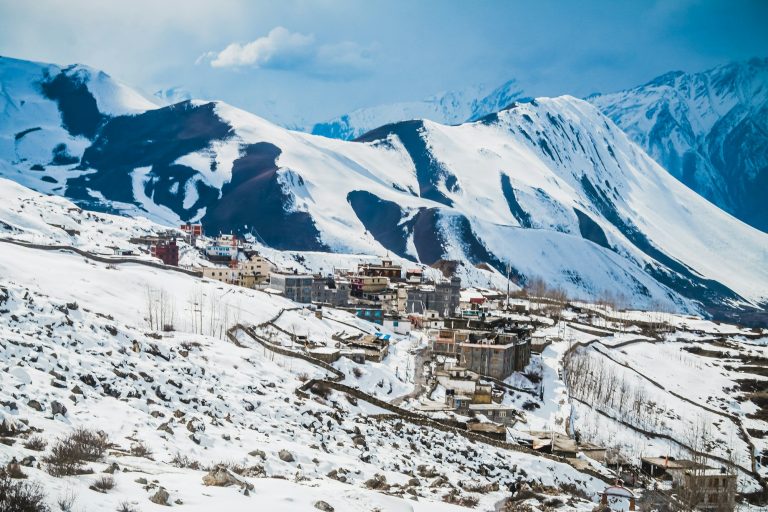
Lo Manthang is the walled capital of the old Kingdom of Lo, on a windswept plateau at about 3,800 m in the far north of Upper Mustang, a short ride from the Tibetan border. Inside its six-metre mud walls are some 150–180 whitewashed houses, a four-storey royal palace and monasteries whose 15th-century murals rank among the finest surviving Tibetan Buddhist art anywhere. It has been on UNESCO’s Tentative List of World Heritage Sites since 2008.
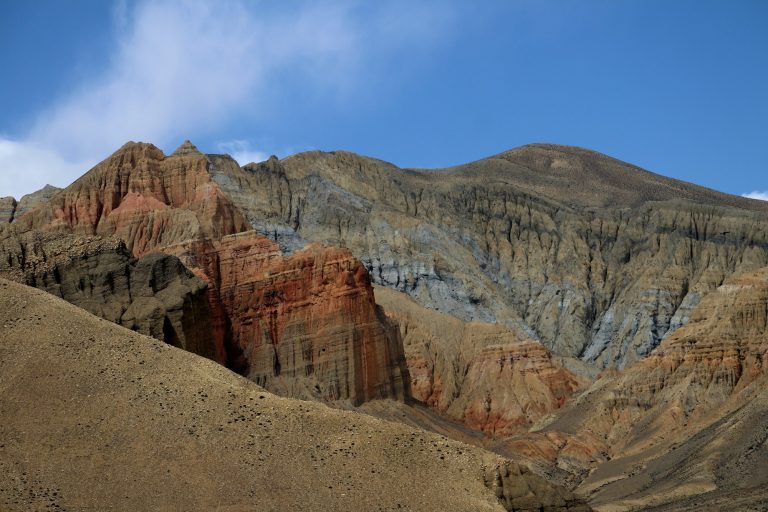
For riders it is the climax of the greatest motorbike journey in Nepal: two days of high desert, red cliffs and passes around 4,000 m before the walls appear across the plain. This guide covers Lo Manthang’s history, what to see inside and outside the walls, the Tiji festival, how to get there, permits, when to go, altitude and practical details like money, phone signal and where to stay.
| Lo Manthang at a glance | |
|---|---|
| Altitude | About 3,800 m (sources range from 3,730 to 3,840 m) |
| Region | Upper Mustang — a restricted area |
| Founded | Kingdom of Lo founded 1380 by Ame Pal; city and palace built largely in the 15th century |
| Population | Around 1,000 in the wider municipality; far fewer in winter |
| From Jomsom | About 2 days by motorbike or jeep via Kagbeni, Chele, Ghami and Tsarang |
| To Kora La (Tibet border) | About 30 km |
| Permits | Restricted Area Permit (USD 50 per person per day under the November 2025 rules) + ACAP |
| Guide | Licensed guide and registered agency required |
| Best time | Late March to November; Tiji festival usually in May |
In this guide
- History of Lo Manthang and the Kingdom of Lo
- Inside the walls
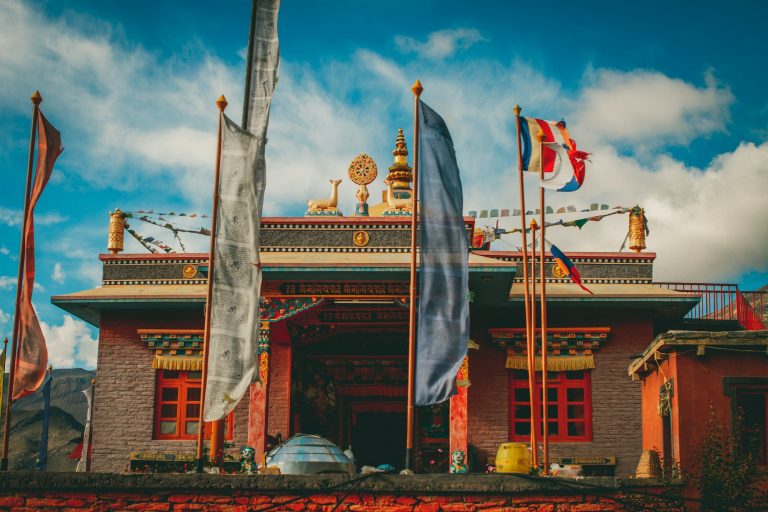
- The monasteries of Lo Manthang
- The Royal Palace
- Things to do around Lo Manthang
- The Tiji festival
- How to get to Lo Manthang
- Permits and rules
- When to visit Lo Manthang
- Altitude, money, phone and lodging
- The people and culture of Lo
- A sample motorbike itinerary to Lo Manthang
- FAQs
History of Lo Manthang and the Kingdom of Lo
The Kingdom of Lo was founded in 1380 by Ame Pal, a warrior king who united the region and oversaw the building of a walled capital on the plain of Lo. Over the following century the city, its palace and its great monasteries took shape, funded by Lo’s control of the trade route between Tibet and the Indian subcontinent: salt and wool came south, grain and goods went north, and Lo took its cut.
Lo’s golden age in the 15th century produced the monasteries of Jampa (founded around 1448) and Thubchen (1470s), built by Sakya masters with Newar artists from the Kathmandu valley. Later, Lo became a tributary of the Gorkha kingdom and was absorbed into Nepal in the late 18th century, but its hereditary king — the Raja of Mustang, or Lo Gyalpo — kept his title and much local authority.
In the 1960s Upper Mustang became a base for Tibetan Khampa resistance fighters, and Nepal kept the region closed to foreigners until 1992. When Nepal abolished its own monarchy in 2008, the Raja of Mustang lost his title too. The last king, Jigme Dorje Palbar Bista, who reigned from 1964, died in 2016. His family still owns the palace.
The 2015 Gorkha earthquake damaged the palace and monasteries. Restoration of the monasteries’ murals, begun in the 1990s with the American Himalayan Foundation and local craftsmen trained in traditional techniques, continued afterwards; the palace’s restoration has been slower and partial.
Inside the walls
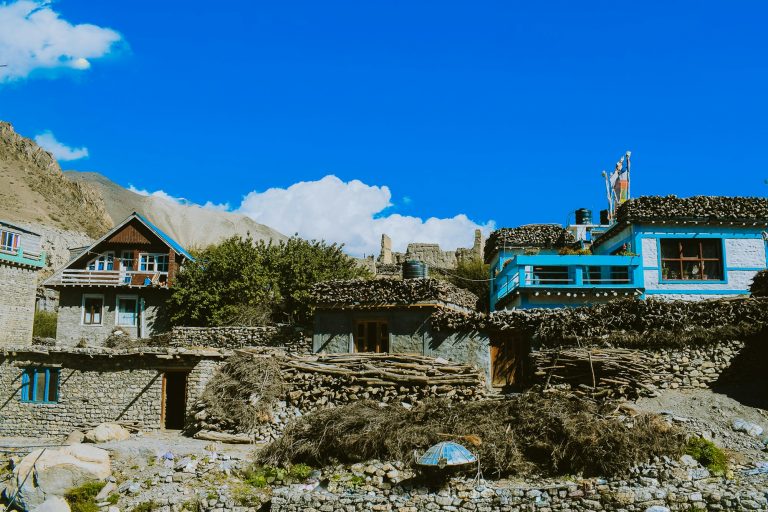
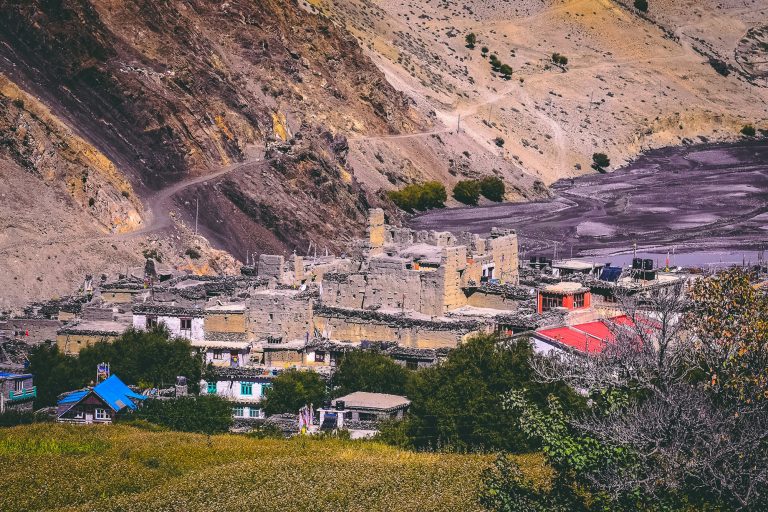
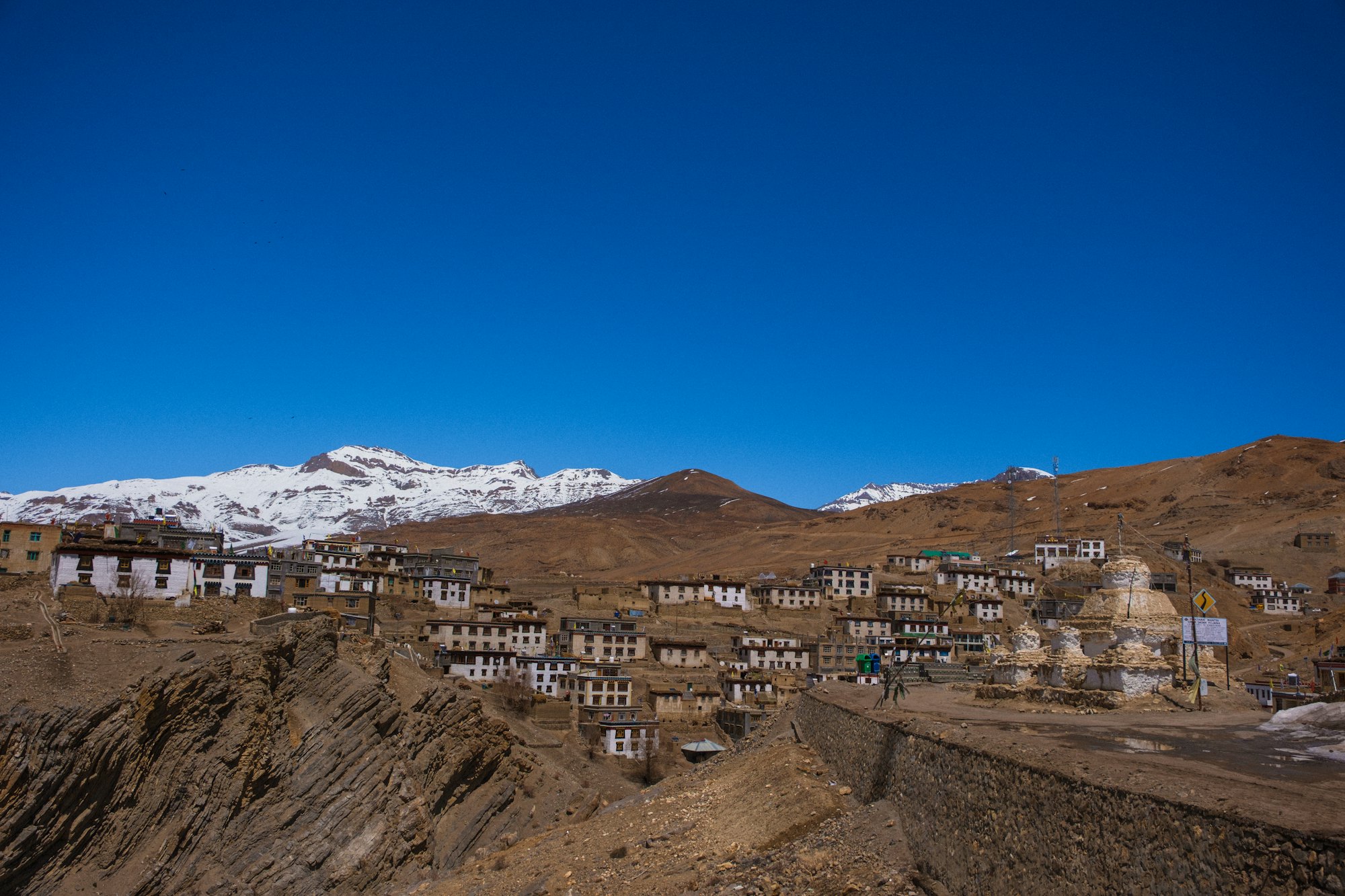
The wall of Lo Manthang runs around a rough rectangle with watchtowers along it and a single main entrance gate. Inside, flat-roofed houses of whitewashed mud brick crowd around narrow lanes and small squares, with firewood and dried dung stacked on the roofs for winter.
Walk the lanes early in the morning, when locals circle the city and its prayer wheels clockwise, women fetch water and the horses are led out to pasture. Climb onto a rooftop (with permission) for a view over the city to the surrounding fields and cliffs.
The monasteries of Lo Manthang
Jampa (Champa) Lhakhang
The “Temple of Maitreya”, founded around 1448, is a three-storey building housing a huge clay statue of the future Buddha and walls covered with mandalas — the largest surviving collection of 15th-century mandala murals in the world. Years of careful restoration have revealed colours that look almost new.
Thubchen Gompa
A vast red assembly hall from the 1470s, its timber columns rising into the gloom, with wall paintings of Buddhas and protector deities. Its murals were restored in a project begun in the late 1990s.
Chode Gompa
The main active monastery, home to the monks who perform the Tiji festival. Next to it, the Dragkar-Thegchen Ling complex has housed a small monastic museum.
Visiting the monasteries
- A combined ticket for the monasteries has typically been around NPR 1,000 per person; fees and opening times change, so ask at your lodge.
- Monasteries often open at set times — commonly the afternoon — and a monk will unlock each one. Go with your guide.
- Photography is usually not allowed inside. Bring a torch to see the murals.
- Remove shoes and hats, walk clockwise and do not touch the paintings.
The Royal Palace
The Tashi Gephel palace is a four-storey building of mud brick and timber in the heart of the city, built in the 15th century and home to the kings of Lo for more than 500 years. Damaged in the 2015 earthquake, it has been partly restored. Interior access is not guaranteed: it depends on the family and on ongoing conservation work. Even from outside, the palace square in front of it — where Tiji is performed — is the centre of city life.
Ride to Lo Manthang with us
13 days from Kathmandu with the restricted-area permit, licensed guide, mechanic and a rest day in the walled city.
Things to do around Lo Manthang
- Chhoser and the Jhong cave — about 8 km north, a five-storey cave complex of more than 40 rooms connected by ladders and tunnels, cut into the cliffs perhaps 2,000–3,000 years ago. Entry has been around NPR 1,000. Combine with the cliff-side Nyiphu and Garphu monasteries. A half-day trip by bike, jeep or horse.
- Namgyal Gompa and Tingkhar — a hilltop monastery and a traditional village just west of the city; an easy afternoon ride or walk.
- Kora La — the border pass with Tibet at about 4,660 m, around 30 km north. It is a trade crossing only (customs operations began in 2025); foreign tourists cannot cross into Tibet here. The altitude is very high, so go only if well acclimatised.
- Horse riding — locals hire out Mustang ponies for rides across the plain.
- Sky caves — Upper Mustang has around 10,000 man-made caves; archaeologists have found human remains, manuscripts and murals in some of them.
- Tsarang — on the way in or out: a crumbling palace and a red monastery above a green oasis, the old capital before Lo Manthang.
- Ghar Gompa and Dhakmar — near Ghami: an ancient monastery traditionally linked to Guru Rinpoche, and the famous red cliffs.
The Tiji festival
Tiji is Lo Manthang’s great festival, held over three days in the square in front of the palace. Its name is usually explained as a short form of “Tempa Chirim”, a prayer for world peace. Monks of Chode Gompa, in elaborate masks and costumes, perform cham dances re-enacting the story of Dorje Jono, a deity who defeats his demon father to save the land of Lo from drought and disaster.
- Day 1 — Tsa Chham: the opening dances and the unveiling of a huge thangka on the palace wall.
- Day 2 — Nga Chham: further dances telling the story of the demon.
- Day 3 — Rha Chham: the demon is symbolically destroyed and the city celebrates.
Tiji follows the Tibetan lunar calendar and usually falls in May (occasionally late April or early June). Dates are confirmed by the monastery each year. Lodges fill months ahead, so book early if you want to ride in for it. A second festival, Yartung, brings horse racing and archery to Lo Manthang in late summer, usually August.
How to get to Lo Manthang
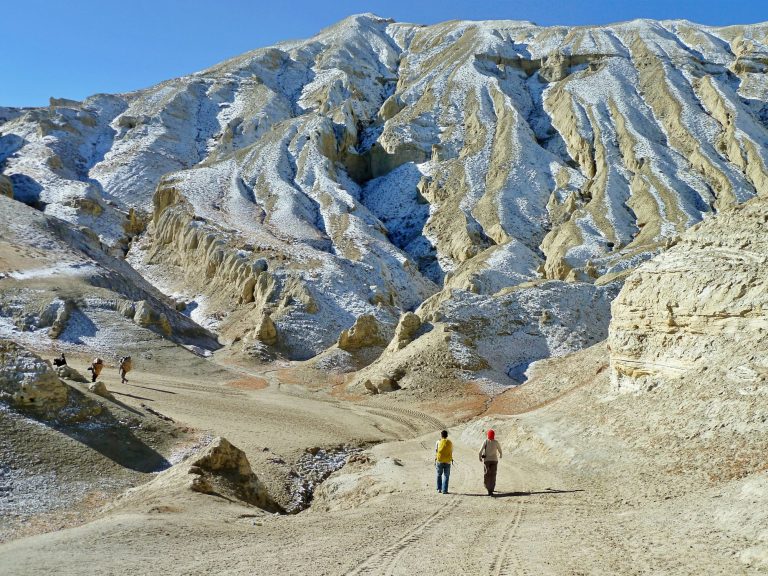
From Jomsom, the road runs north to Kagbeni, the checkpoint for Upper Mustang, then climbs through Tangbe, Chhusang and Chele and over a series of passes around 3,800–4,000 m via Samar, Syangboche and Ghiling to Ghami, Tsarang and the plain of Lo. It is mainly gravel and dirt, with sand, dust, some steep switchbacks and stream crossings; the Kaligandaki Corridor upgrade is slowly adding tarmac north of Kagbeni. By motorbike or jeep it takes about two days from Jomsom, with a night in Ghami or Tsarang. Trekkers take about a week on the old trails.
From Pokhara, allow four days by road to reach Lo Manthang at a sensible pace for acclimatisation, and from Kathmandu at least five or six. Our 13-day Upper Mustang motorbike tour includes a rest day in Lo Manthang and a different route back via Tsarang and Muktinath.
Permits and rules
- Restricted Area Permit (RAP): required north of Kagbeni. In November 2025 Nepal’s cabinet approved replacing the old USD 500-for-10-days fee with USD 50 per person per day. Confirm the fee in force when you book.
- ACAP: NPR 3,000 for foreign nationals.
- Agency and guide: the RAP is issued only through a registered Nepali agency, and a licensed guide must accompany you. Groups generally need at least two foreigners.
- Checkpoints: at Kagbeni (and sometimes Chele) on the way in and out.
Read our full Upper Mustang permit guide.
When to visit Lo Manthang
Late March to November. Spring brings Tiji and warming days; summer is dry thanks to the rain shadow, with green barley fields and the Yartung festival (though the road below Jomsom can be blocked by landslides); autumn has the clearest skies but cold nights. From December to February temperatures fall to −15°C or lower, many residents move to Pokhara or Kathmandu and most lodges close. See the best time to visit Mustang.
Altitude, money, phone and lodging
- Altitude: at about 3,800 m, with passes around 4,000 m on the way, acute mountain sickness is a real risk. Sleep at Kagbeni and Ghami or Tsarang before Lo Manthang and take a rest day on arrival. Read Upper Mustang altitude and AMS.
- Money: there are no ATMs in Lo Manthang. The last reliable ones are in Jomsom and Muktinath. Carry all the cash you need.
- Phone: Nepal Telecom has 3G in Lo Manthang; signal elsewhere in Upper Mustang is patchy. Lodges have Wi-Fi of varying speed.
- Power: grid supply plus solar, with cuts. Bring a power bank.
- Lodges: several comfortable newer lodges with hot showers (sometimes for a small fee), dining rooms with stoves and Tibetan-style rooms. Book ahead around Tiji.
- Food: dal bhat, Tibetan bread, tsampa, thukpa, momos, yak meat and butter tea.
- Fuel: limited supply in Lo Manthang; your support vehicle or guide will plan fuel.
The people and culture of Lo
The people of Upper Mustang are the Loba (or Lhopa), “the people of Lo”. They speak a Tibetan dialect and the great majority follow Tibetan Buddhism, mainly of the Sakya school, whose monasteries dominate Lo Manthang. Daily life still revolves around barley and buckwheat fields watered by long irrigation channels, herds of goats, sheep, yaks and horses, and trade.
Some older traditions are fading. Polyandry — one woman marrying several brothers to keep family land together — was once common and is now rare. Sky burial, in which the dead are offered to vultures, has been practised in parts of Upper Mustang but is declining. Many young people now study or work in Kathmandu, Pokhara or abroad, and a growing number of families spend the winter in the south.
Be a respectful visitor: ask before photographing people, walk clockwise around chortens and mani walls, do not touch religious objects, and dress modestly. A small donation when visiting a monastery is appreciated.
A sample motorbike itinerary to Lo Manthang
| Day | Route | Sleep at |
|---|---|---|
| 1 | Pokhara – Beni – Tatopani | ~1,200 m |
| 2 | Tatopani – Ghasa – Marpha – Kagbeni | ~2,810 m |
| 3 | Kagbeni – Chele – Samar – Ghami | ~3,520 m |
| 4 | Ghami – Dhakmar – Ghar Gompa – Lo Manthang | ~3,800 m |
| 5 | Rest day: monasteries, palace, Namgyal and Tingkhar | ~3,800 m |
| 6 | Chhoser caves and back to Lo Manthang, or start south to Tsarang | ~3,560–3,800 m |
| 7 | Lo Manthang – Tsarang – Ghami – Kagbeni or Muktinath | ~2,810–3,700 m |
| 8–9 | Back down the Kali Gandaki to Pokhara | — |
This follows the acclimatisation guidance of not raising your sleeping altitude by more than about 500 m a day above 3,000 m. Our guided Upper Mustang motorbike tour adds the ride from Kathmandu and a buffer day for the road.
Frequently asked questions
What is the altitude of Lo Manthang?
About 3,800 m (12,500 ft). Sources range from 3,730 m to 3,840 m.
Where is Lo Manthang?
In Upper Mustang, north-central Nepal, about 30 km from the Tibetan border and about two days by road north of Jomsom.
Can I visit Lo Manthang without a guide?
No. Upper Mustang is a restricted area; foreigners need a Restricted Area Permit through a registered agency and must be accompanied by a licensed guide.
How much does it cost to visit Lo Manthang?
The restricted-area permit is USD 50 per person per day under the rules approved in November 2025, plus ACAP (NPR 3,000), guide, transport and lodging. A 12–13 day guided motorbike tour from Kathmandu costs about USD 2,700–3,500.
Is Lo Manthang still a kingdom?
No. The Kingdom of Lo kept its own king within Nepal until 2008, when Nepal abolished its monarchy. The last king died in 2016.
When is the Tiji festival?
Usually in May, over three days, according to the Tibetan lunar calendar. Dates are confirmed each year.
Can I go to Tibet from Lo Manthang?
No. Kora La is a trade crossing only and is not open to foreign tourists.
Is there an ATM in Lo Manthang?
No. Bring cash from Jomsom or Pokhara.
How many days do I need in Lo Manthang?
At least two nights: one rest day to see the city and monasteries, and ideally a second day for the Chhoser caves.
Why is Lo Manthang called the Forbidden Kingdom?
Because the Kingdom of Lo was closed to outsiders until 1992 and still requires a special permit.
Ride to Lo Manthang
13 days from Kathmandu, with restricted-area permit, guide, mechanic and a rest day in the walled city.