Kagbeni and Marpha: Two Mustang Villages Worth Stopping For
Jomsom gets the airport and Muktinath gets the pilgrims, but the two villages most travellers remember from Lower Mustang are Marpha and Kagbeni. One is a tidy, whitewashed Thakali village of flagstone lanes, orchards and apple brandy; the other is a maze of mud-brick houses, tunnels and a great red monastery at the gateway to the forbidden Kingdom of Lo. Both sit on the road from Pokhara to Muktinath, and both deserve a night.
This guide covers each village’s history, what to see, where to stay and eat, how to get there by road (including by motorbike), permits — especially the rules at Kagbeni’s Upper Mustang checkpoint — and nearby side trips.
| Marpha | Kagbeni | |
|---|---|---|
| Altitude | About 2,650–2,670 m | About 2,800–2,810 m |
| Distance from Jomsom | About 6–7 km south | About 10–11 km north |
| Distance to Muktinath | About 30 km | About 12 km |
| People | Thakali | Baragaun (Tibetan-influenced) |
| Known for | Apples and apple brandy, whitewashed lanes, Nyingma monastery | Medieval village, Kag Chode monastery, gateway to Upper Mustang |
| Permit | ACAP | ACAP (Restricted Area Permit needed to go further north) |
In this guide
- Marpha: the apple village
- Things to do in Marpha
- Mustang apples: harvest and festival
- Kagbeni: gateway to the Kingdom of Lo
- Things to do in Kagbeni
- Permits and the Kagbeni checkpoint
- Getting there
- Where to stay and eat
- Nearby side trips
- Best time to visit
- Thakali and Baragaun culture
- How to see both villages in two days
- Kagbeni as the start of an Upper Mustang journey
- FAQs
Marpha: the apple village
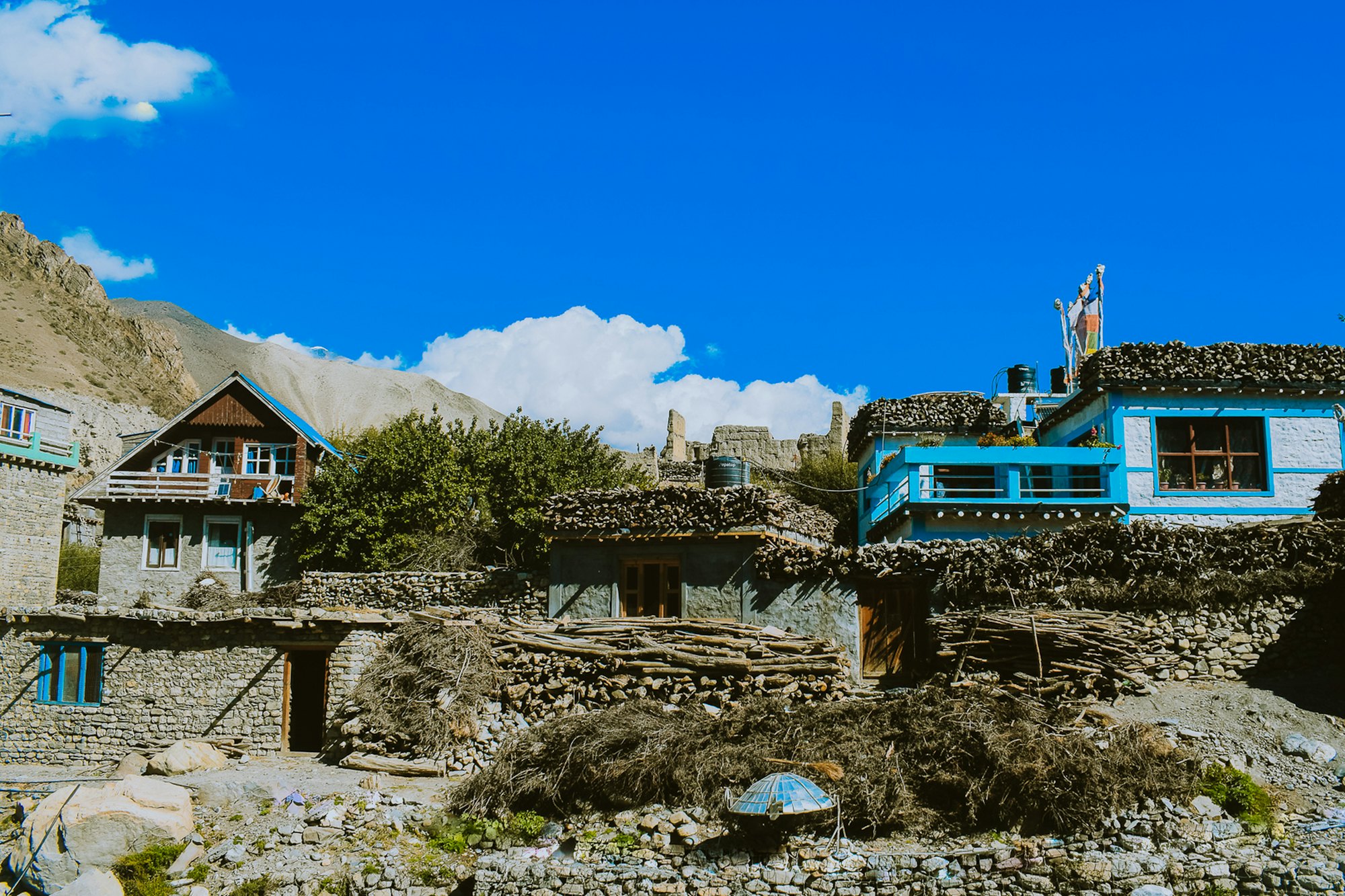
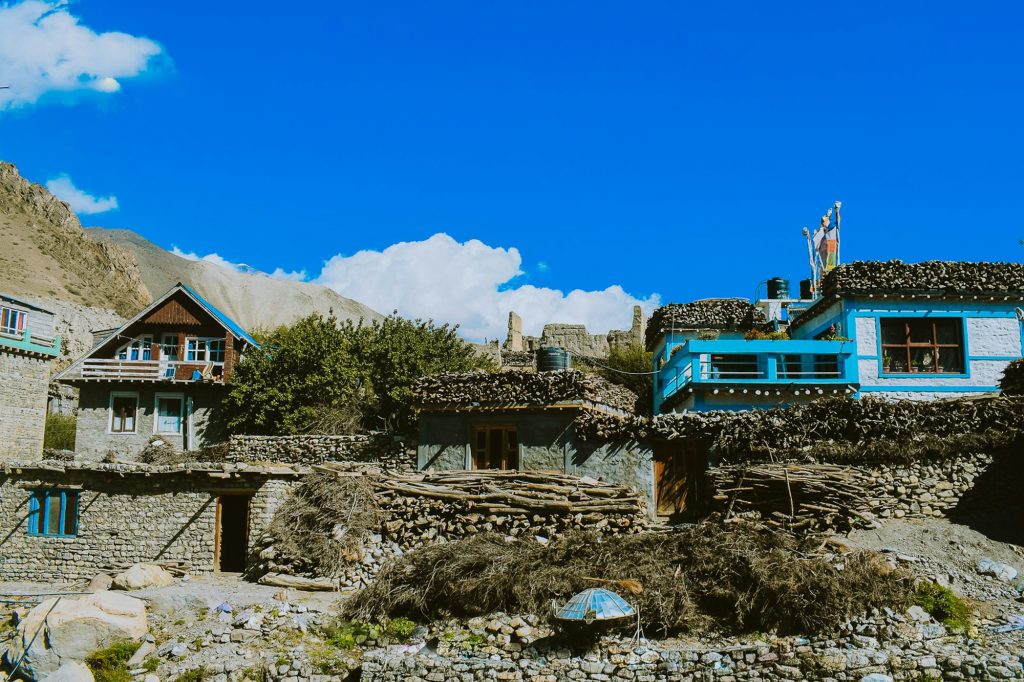
Marpha is the main village of the Thakali people of the upper Kali Gandaki, built on a slope above the river beneath the cliffs of Nilgiri. Its name is often explained as “hard-working people” (mar, hard work; pha, people). A single stone-flagged main street runs through the village between whitewashed houses, with drainage channels running beneath the paving and firewood stacked on the flat roofs — a store of winter fuel and a traditional sign of a household’s wealth in a valley with few trees.
The old village originally stood on a defensive plateau to the west; the present village grew up along the trade route. The Japanese monk and explorer Ekai Kawaguchi stayed in Marpha in 1899–1900 on his way to Tibet, studying Tibetan before attempting to cross the border in disguise; the house where he lodged is now a small museum.
Things to do in Marpha
- Walk the main street at dawn, before the wind gets up, when the lanes are quiet and the light catches the white walls and Nilgiri above.
- Climb to the monastery. Samten Choling, a Nyingma monastery, overlooks the village; the masked Dhekep dances are performed here in autumn. The view over the flat roofs and the valley is the best in Marpha.
- Visit the horticulture centre. The government horticulture farm south of the village was founded in 1966 and is now the Temperate Horticulture Development Centre, holding dozens of apple varieties. It is the reason Mustang became Nepal’s apple country.
- Taste the apples. Apple pie, apple crumble, dried apple, juice, cider and jam in every bakery and lodge.
- Try the brandy. Marpha’s distilleries produce apple and apricot brandy of around 42% alcohol. Sip it in the evening — never before riding.
- Visit the Ekai Kawaguchi house and the small Thakali cultural displays.
- Ride or walk to Chhairo, a few minutes south across the river: a small Tibetan settlement with one of the oldest Nyingma gompas in Nepal (its age is variously given as 300–500 years).
Mustang apples: harvest and festival
Apples were introduced to Mustang on a commercial scale with the horticulture farm in the 1960s, and the cold, dry, sunny climate proved ideal. Today orchards line the valley from Tukuche to Kagbeni and Jhong, and “Marpha apples” are sold across Nepal.
Harvest runs from mid-September into October. The horticulture centre in Marpha hosts an apple-picking festival in the second half of September, when visitors can pick their own fruit. In spring the orchards are in blossom — another lovely time to visit.
Kagbeni: gateway to the Kingdom of Lo
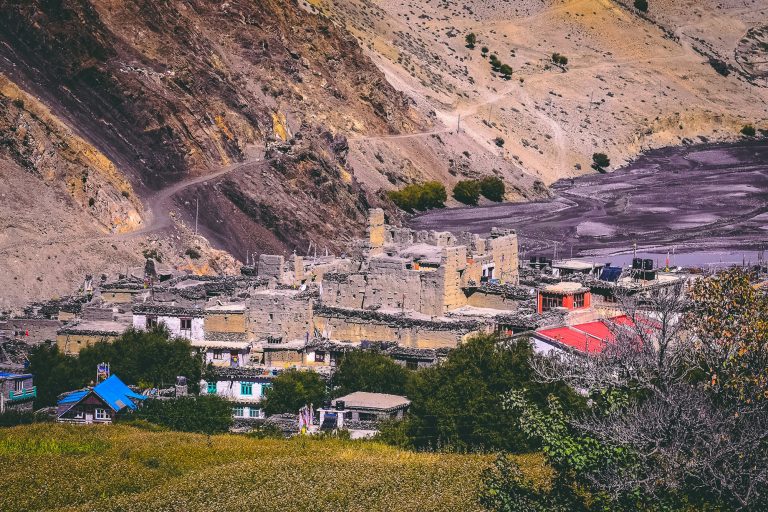
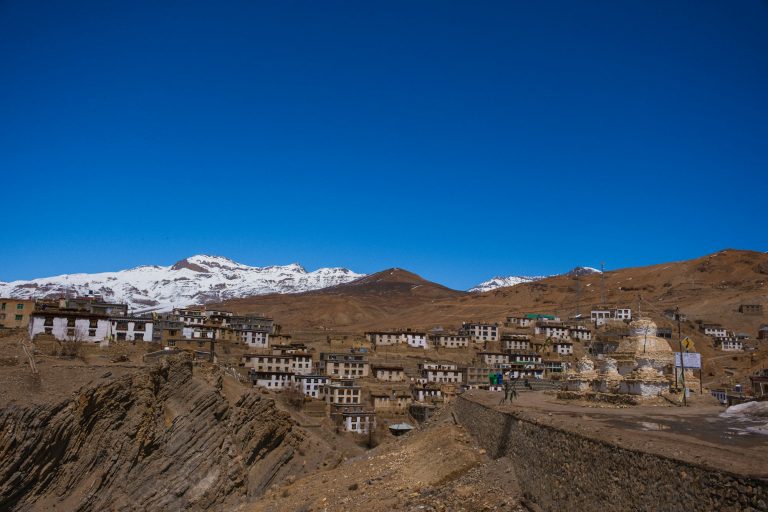
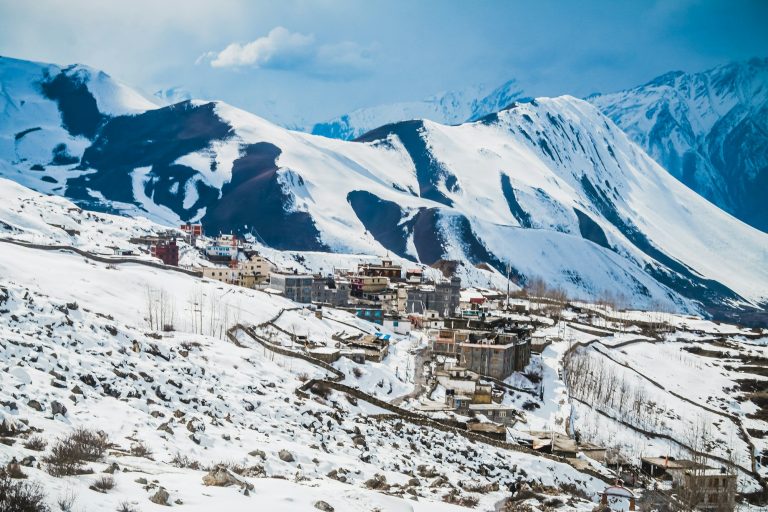
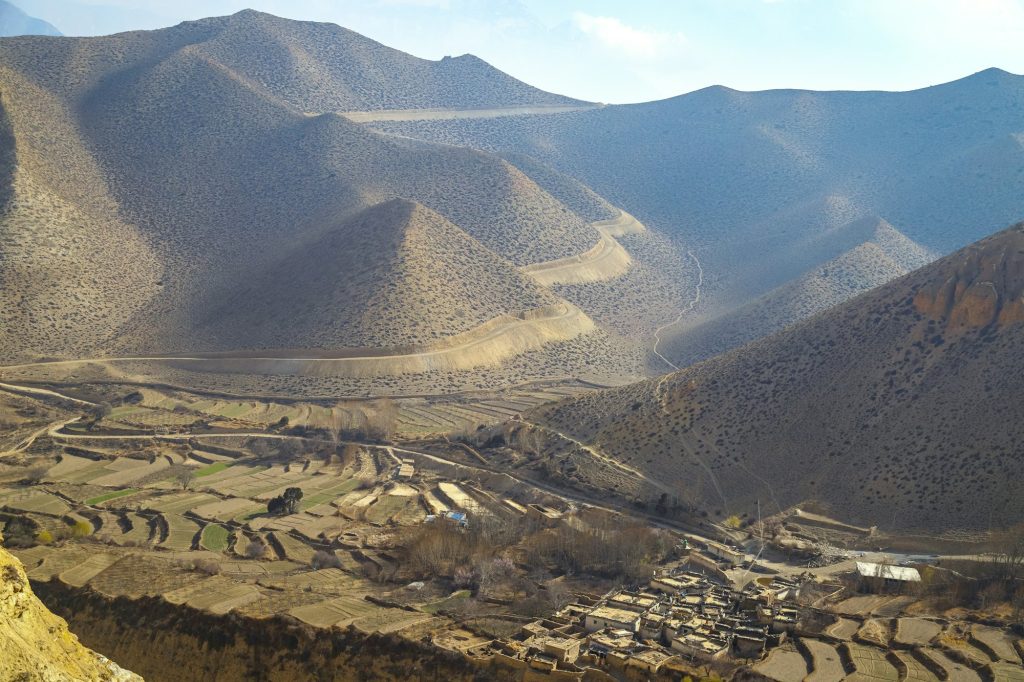
Kagbeni sits where the Jhong Khola meets the Kali Gandaki, a green oasis of barley fields, poplars and orchards in a grey-brown landscape. The name combines kag — usually explained as “block” or “stopping point” — with beni, a river confluence. Its tight cluster of mud-brick houses, chortens, prayer wheels and covered passages was built for defence and shelter from the wind, and the village once had a fort, the Kag Khar, whose ruins still stand.
For centuries Kagbeni controlled traffic on the salt route between Tibet and the south. Today it is the last village before Upper Mustang: at the northern edge of the village a notice board and checkpoint mark the start of the restricted area. Beyond it, foreigners need a Restricted Area Permit and a licensed guide.
Sleep in Marpha and Kagbeni on a ride
Both villages are overnight stops on our Pokhara to Muktinath and Lower Mustang tours.
Things to do in Kagbeni
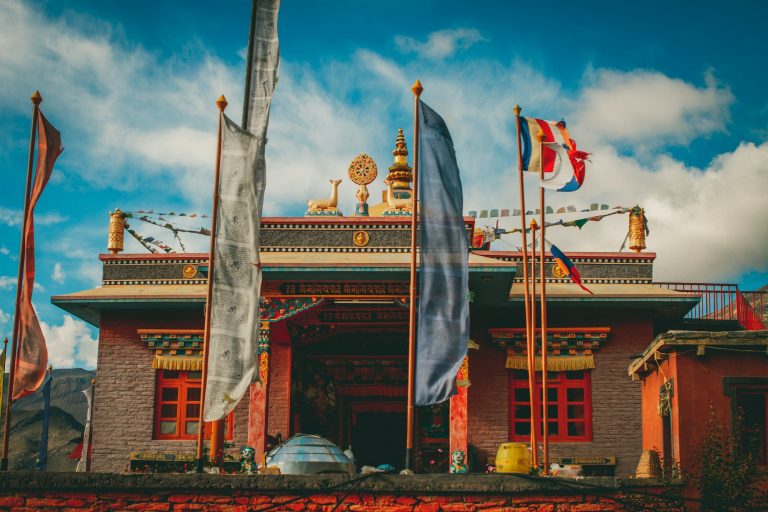
- Kag Chode monastery (Kag Chode Thupten Samphel Ling). A large red Sakya monastery, founded according to tradition in 1429, that once housed monks from a dozen surrounding villages. It contains statues and texts several centuries old. The monastery was partly damaged when the Kagbeni river flooded in August 2023, and repairs have been ongoing — ask locally about access.
- The guardian figures. Ancient clay effigies of a male and a female protector stand at the edges of the village to ward off evil spirits — an unusual and slightly unnerving sight.
- Wander the old village. Duck through the tunnels and narrow lanes between houses, past prayer wheels and chortens, and climb to the edge of the village for the view north up the Kali Gandaki towards Upper Mustang.
- Watch the pilgrims at the confluence. Hindu pilgrims on their way to Muktinath perform shraddha rites for their ancestors where the rivers meet.
- Ride or walk to Jhong, a hilltop village with a ruined fort across the valley, for views back over Kagbeni and into Upper Mustang.
Permits and the Kagbeni checkpoint
Both villages are in Lower Mustang and need only the ACAP permit (NPR 3,000 for foreign nationals, NPR 1,000 for SAARC nationals). Buy it in advance in Pokhara or Kathmandu or online.
North of Kagbeni, Upper Mustang is a restricted area. You need a Restricted Area Permit, issued only through a registered agency, and must be accompanied by a licensed guide; groups generally need at least two foreigners. In November 2025 Nepal approved a change from USD 500 for 10 days to USD 50 per person per day. Riding or walking past the checkpoint without the permit is not allowed. Full details: Upper Mustang permit guide.
Getting there
Both villages are on the Beni–Jomsom–Muktinath road. From Pokhara, allow two days by jeep or motorbike, with a night at Tatopani; Marpha is a natural second-night stop and Kagbeni a third before Muktinath. From Jomsom, Marpha is 20–30 minutes south and Kagbeni 20–30 minutes north by road; on foot each takes about two hours.
The road from Jomsom to Kagbeni is blacktopped; between Jomsom and Marpha it is partly paved. Ride early, before the afternoon wind turns the riverbed into a sandstorm. You can self-ride with a bike from a Pokhara rental shop, or stay in both villages on our Pokhara to Muktinath tour and the longer Lower Mustang tour. To continue north from Kagbeni into the Kingdom of Lo, join the Upper Mustang motorbike tour. Road details are in the Pokhara to Muktinath road guide.
Where to stay and eat
Marpha has some of the most charming lodges in Mustang — traditional Thakali houses with courtyards, wood stoves and good kitchens. Many travellers prefer it to Jomsom as a base. Kagbeni has a good range of lodges and cafés, including several with rooftop terraces looking towards Upper Mustang, and is a sensible place to sleep before going up to Muktinath, which helps with acclimatisation.
In both, Thakali dal bhat is the staple, with buckwheat specialities, Tibetan bread, momos and, of course, apple pie. Prices are a little higher than in the lowlands because everything is brought up the road.
Nearby side trips
- Jomsom — between the two villages: fuel, ATMs, the Mustang Eco Museum. See the Jomsom guide.
- Thini and Dhumba Lake — an old village and a small sacred lake above Jomsom with views of Nilgiri.
- Tukuche — south of Marpha, the old Thakali trading capital with grand merchant houses and a distillery.
- Lubra — a Bon village in a side valley east of Jomsom.
- Muktinath — 12 km above Kagbeni. See the Muktinath temple guide.
- Upper Mustang — beyond Kagbeni, with permit and guide. See the Mustang guide and the Lo Manthang guide.
Best time to visit
April–May for blossom and warm days; mid-September to October for the apple harvest and clear skies; November for crisp, quiet days. Both villages stay open in winter, but it is cold and windy. In the monsoon the villages themselves stay fairly dry, but the road from Beni is often disrupted. See the best time to visit Mustang.
Thakali and Baragaun culture
Marpha and Kagbeni lie in two different cultural worlds. Marpha is in Thak Khola, the land of the Thakali, whose wealth came from controlling the salt trade and running inns along the route. Thakali communities are known for their organisation — village councils, rotating credit associations and strict rules on village cleanliness — and for a blend of Tibetan Buddhist, Bon and Hindu practice. Their food, the Thakali set, is now Nepal’s favourite restaurant meal.
Kagbeni belongs to Baragaun, the “twelve villages” of the Muktinath valley and surrounding area, whose people are culturally closer to Tibet. Life revolves around the monastery, irrigated barley fields, livestock and, increasingly, tourism and pilgrimage. Many Baragaun villages share the Yartung horse festival with Lo Manthang in late summer.
In both villages, walk clockwise around chortens and mani walls, ask before photographing people, and dress modestly when visiting monasteries.
How to see both villages in two days
| Time | Plan |
|---|---|
| Day 1 afternoon | Arrive in Marpha from Tatopani; walk the main street and climb to the monastery for sunset. |
| Day 1 evening | Thakali dinner and a small glass of apple brandy. |
| Day 2 early morning | Visit Chhairo gompa and the horticulture centre; ride or drive to Jomsom (20–30 minutes). |
| Day 2 late morning | Continue to Kagbeni before the wind; visit Kag Chode and the old village. |
| Day 2 afternoon | Walk to the northern edge of the village to look into Upper Mustang; overnight in Kagbeni. |
| Day 3 | Ride or drive up to Muktinath early, when the air is clear. |
Annapurna Circuit trekkers usually see the villages in the opposite direction: they arrive at Muktinath from the Thorong La, descend to Kagbeni, then follow the valley (or quieter east-bank trails) down through Jomsom to Marpha.
Kagbeni as the start of an Upper Mustang journey
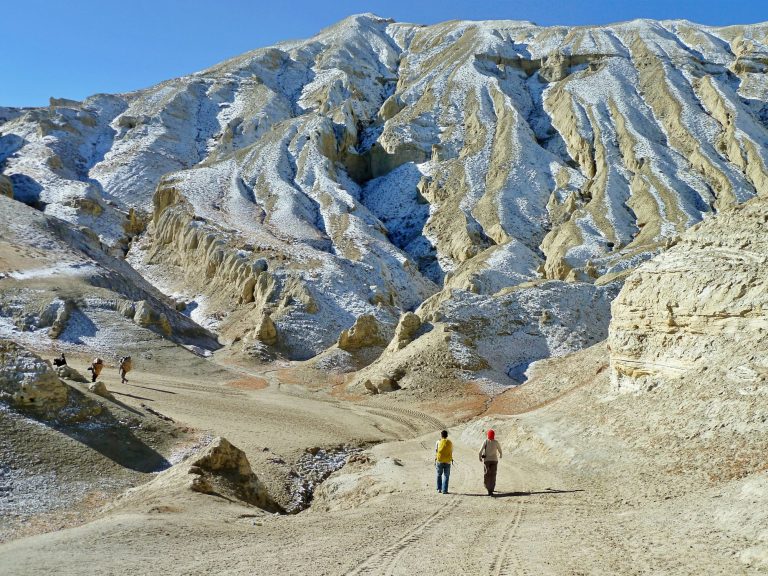
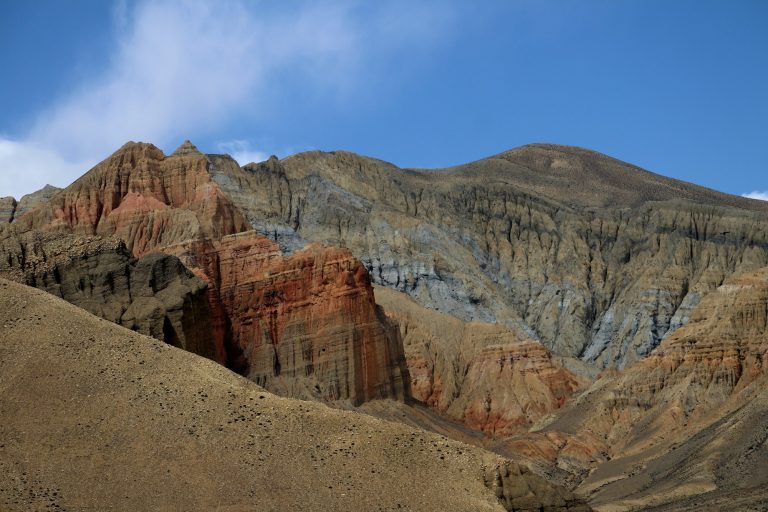
For travellers heading into the Kingdom of Lo, Kagbeni is where the real adventure begins. Guides present the Restricted Area Permits at the checkpoint, and the road north follows the Kali Gandaki through Tangbe and Chhusang, with their cliff caves and red-and-ochre walls, before climbing to Chele and the first high passes. The change north of Kagbeni is striking: fewer trees, larger chortens, more Tibetan villages and a vast, eroded landscape.
If you are planning to continue, sleep at least one night in Kagbeni to help acclimatisation before Ghami or Lo Manthang. Read the Lo Manthang guide and Upper Mustang altitude advice.
Frequently asked questions
How high is Kagbeni?
About 2,800 m (9,200 ft).
How high is Marpha?
About 2,650–2,670 m (8,700 ft).
Do I need a special permit for Kagbeni?
No, only the ACAP permit. A Restricted Area Permit and licensed guide are needed to go north of the village into Upper Mustang.
What is Kag Chode monastery?
A Sakya monastery in Kagbeni, traditionally said to have been founded in 1429; it was partly damaged in a 2023 flood.
Why do Hindu pilgrims stop in Kagbeni?
To perform shraddha rites for their ancestors at the confluence of the Kali Gandaki and Jhong rivers on the way to Muktinath.
What is Marpha famous for?
Its whitewashed Thakali architecture, apple orchards, apple products and brandy.
How strong is Marpha brandy?
Around 42% alcohol.
How far is Kagbeni from Muktinath?
About 12 km by road, climbing roughly 900 m.
How far is Marpha from Jomsom?
About 6–7 km, 20–30 minutes by road.
Is Marpha or Jomsom better to stay in?
Marpha for atmosphere and quiet; Jomsom for flights, fuel, ATMs and mechanics.
Stay in Marpha and Kagbeni on two wheels
Our Pokhara to Muktinath tour spends a night in each — with a guide, mechanic and permits sorted.